
Biblical Background
Fasting appears throughout both the Old and New Testaments. God’s people fasted during times of repentance, grief, worship, national crisis, decision-making, and preparation for ministry. Although the methods varied, the purpose remained the same: to seek God wholeheartedly.
In the Old Testament, fasting often accompanied prayer during seasons of repentance or urgent need. Leaders such as Moses, David, Esther, Ezra, Nehemiah, and Daniel fasted while seeking God’s guidance and mercy.
In the New Testament, Jesus fasted for forty days before beginning His public ministry (Matthew 4:1–2). He also taught His followers that fasting should be done with humility rather than for public recognition (Matthew 6:16–18). The early church continued this practice when seeking God’s direction for ministry (Acts 13:2–3).
These examples show that biblical fasting is not about outward appearance but about inward devotion to God.
Key References From Core Bible Books
The book of Isaiah explains the kind of fasting God desires. Isaiah 58:6–7 teaches that true fasting includes justice, compassion, generosity, and caring for those in need rather than merely abstaining from food.
The Gospel of Matthew records Jesus’ teaching on fasting. Matthew 6:16–18 emphasizes sincerity, reminding believers to fast for God rather than for human praise.
The book of Joel calls God’s people to wholehearted repentance. Joel 2:12 says, “Return to me with all your heart, with fasting and weeping and mourning” (NIV), showing that fasting expresses genuine repentance.
The book of Acts demonstrates how the early church combined fasting with prayer when seeking God’s direction. Acts 13:2–3 records believers fasting before commissioning Paul and Barnabas for ministry.
Together, these passages reveal that biblical fasting is an expression of humility, dependence, repentance, and faithful obedience.
Spiritual Interpretations
1. The Normal Fast
“After fasting forty days and forty nights, he was hungry.” — Matthew 4:2 (NIV)
A normal fast involves abstaining from food while continuing to drink water. Jesus’ example reminds believers that fasting is a time to rely on God’s strength and prepare the heart for faithful obedience.
2. The Partial Fast
“I ate no choice food; no meat or wine touched my lips.” — Daniel 10:3 (NIV)
Daniel’s fast involved limiting certain foods for a period of time. Many Christians follow this pattern to focus on prayer while maintaining physical nourishment.
3. The Absolute Fast
“Do not eat or drink for three days, night or day.” — Esther 4:16 (NIV)
Esther called for a complete fast without food or water during a national crisis. Because this type of fast is physically demanding, it appears only in exceptional biblical circumstances and for a limited time.
4. The Heart Fast God Desires
“Is not this the kind of fasting I have chosen…” — Isaiah 58:6 (NIV)
Isaiah teaches that true fasting goes beyond abstaining from food. God desires lives marked by justice, compassion, generosity, repentance, and obedience.
Variations and Related Themes
The Bible records many occasions and purposes for fasting. These include:
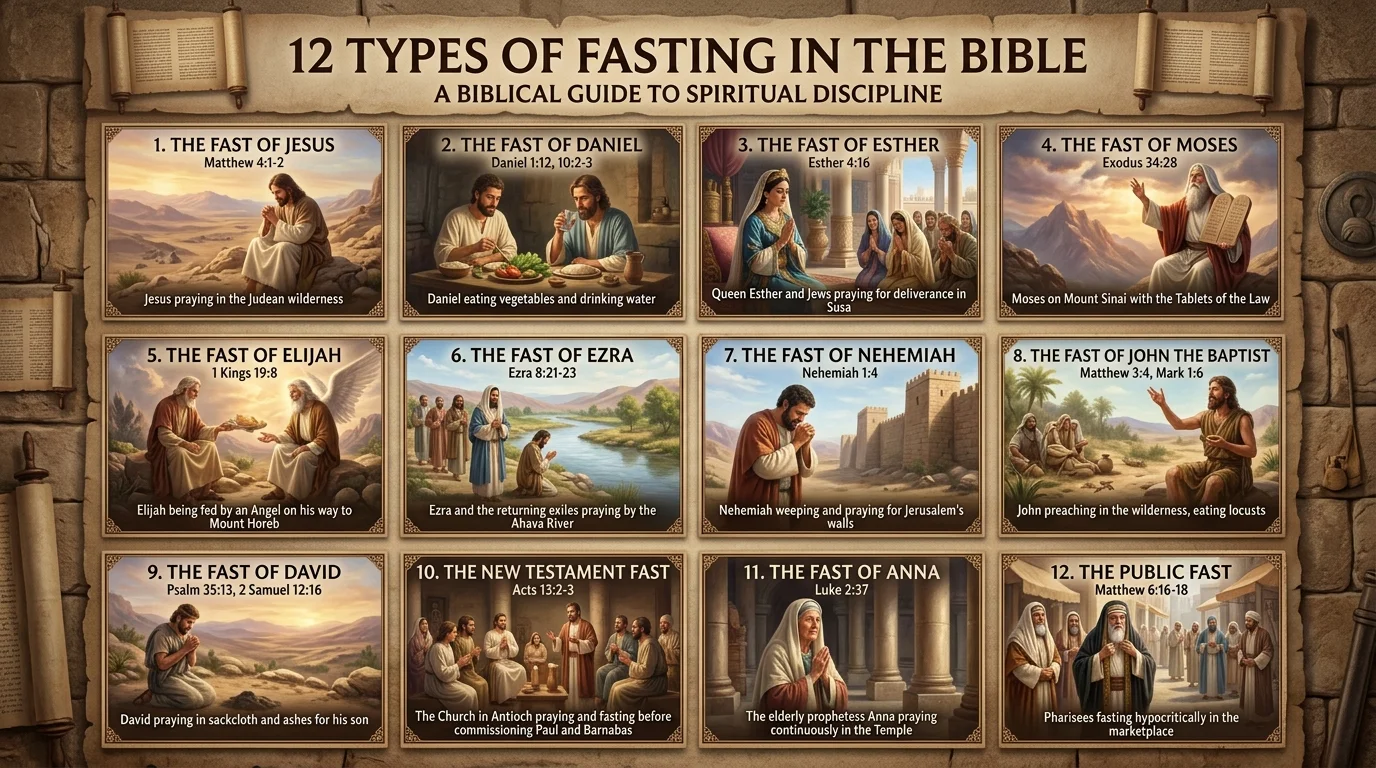
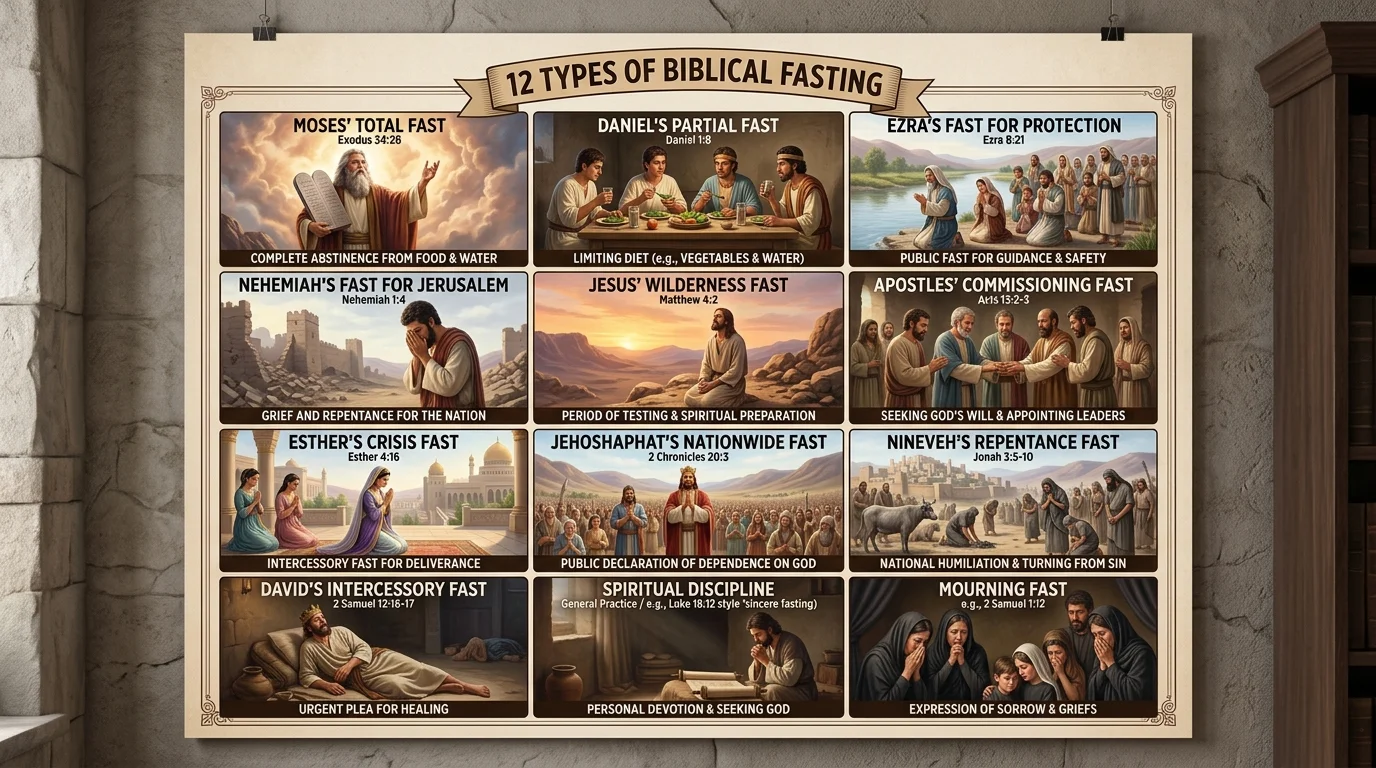
- Moses’ Forty-Day Fast (Exodus 34:28) before receiving God’s covenant.
- Jesus’ Forty-Day Fast (Matthew 4:1–2) before beginning His ministry.
- Daniel’s Partial Fast (Daniel 10:2–3) for understanding and prayer.
- Esther’s Three-Day Absolute Fast (Esther 4:16) during a national crisis.
- David’s Fast of Repentance and Grief (2 Samuel 12:16).
- Ezra’s Fast for Protection (Ezra 8:21–23) before traveling.
- Nehemiah’s Fast of Mourning (Nehemiah 1:4) over Jerusalem.
- Jehoshaphat’s National Fast (2 Chronicles 20:3) before battle.
- Nineveh’s Corporate Fast (Jonah 3:5–10) in response to God’s warning.
- Anna’s Worship Fast (Luke 2:36–37) marked by continual prayer.
- The Church at Antioch’s Ministry Fast (Acts 13:2–3) before sending missionaries.
- The Elders’ Prayer and Fasting (Acts 14:23) when appointing church leaders.
These examples demonstrate that fasting serves different purposes, including worship, repentance, seeking wisdom, protection, guidance, spiritual preparation, and intercession.
Faith-Based Action Steps
1. A Prayer Before Fasting
“Heavenly Father, I desire to seek You with my whole heart. As I fast, help me focus not on what I am giving up but on drawing closer to You. Search my heart, forgive my sins, increase my faith, and teach me to depend on You more than anything else. May this time of prayer and fasting deepen my love for You and strengthen my walk with Christ. Amen.”
2. Fast With the Right Motive
Before beginning a fast, ask yourself why you are fasting. Let your purpose be to seek God’s presence, wisdom, repentance, or guidance rather than to impress others or earn His favor. Pair your fast with prayer, Bible reading, and acts of kindness.
3. Seek Wisdom and Community
If you are new to fasting, begin with a simple, manageable fast and consult a trusted pastor or mature Christian if you have questions. If you have a medical condition, are pregnant, or have dietary concerns, speak with a qualified healthcare professional before undertaking any food fast. Remember that spiritual growth comes from sincere devotion to God, not from the length or difficulty of a fast.