
Biblical Background
Marriage was established by God at creation. Genesis 2:24 says, “That is why a man leaves his father and mother and is united to his wife, and they become one flesh” (NIV). This covenant reflects God’s design for lifelong faithfulness.
When questioned about divorce, Jesus pointed His listeners back to God’s original intention. In Matthew 19:4–6, He emphasized that what God has joined together should not be separated. Jesus explained that divorce became common because of the hardness of human hearts, not because it reflected God’s ideal (Matthew 19:8).
The apostle Paul also addressed marriage and divorce in 1 Corinthians 7, offering pastoral guidance to believers living in difficult situations. His teaching encourages peace, faithfulness, and wisdom while recognizing that some marriages may end because of circumstances beyond one spouse’s control.
Throughout Scripture, marriage is honored as a covenant, and every effort should be made to preserve it when safety, faithfulness, and repentance are possible.
Key References From Core Bible Books
The book of Genesis establishes God’s original design for marriage in Genesis 2:24, showing that husband and wife are united as one flesh in a lifelong covenant.
The Gospel of Matthew records Jesus’ clearest teaching on divorce. In Matthew 19:3–9, Jesus affirms the sanctity of marriage while recognizing sexual immorality as a circumstance in which divorce may occur.
The book of 1 Corinthians provides practical guidance for believers married to both Christians and non-Christians. 1 Corinthians 7:15 addresses situations where an unbelieving spouse chooses to leave the marriage.
The book of Malachi reveals God’s heart toward marriage. Malachi 2:16 strongly condemns faithlessness within marriage and emphasizes God’s desire for covenant faithfulness.
Together, these passages show that while God values lifelong marriage, Scripture also addresses painful situations caused by human sin.
Spiritual Interpretations
1. Marriage Is God’s Sacred Covenant
“So they are no longer two, but one flesh. Therefore what God has joined together, let no one separate.” — Matthew 19:6 (NIV)
Marriage is more than a legal agreement; it is a covenant before God. Husbands and wives are called to love, honor, forgive, and remain faithful to one another. This is God’s ideal and should always be pursued whenever possible.
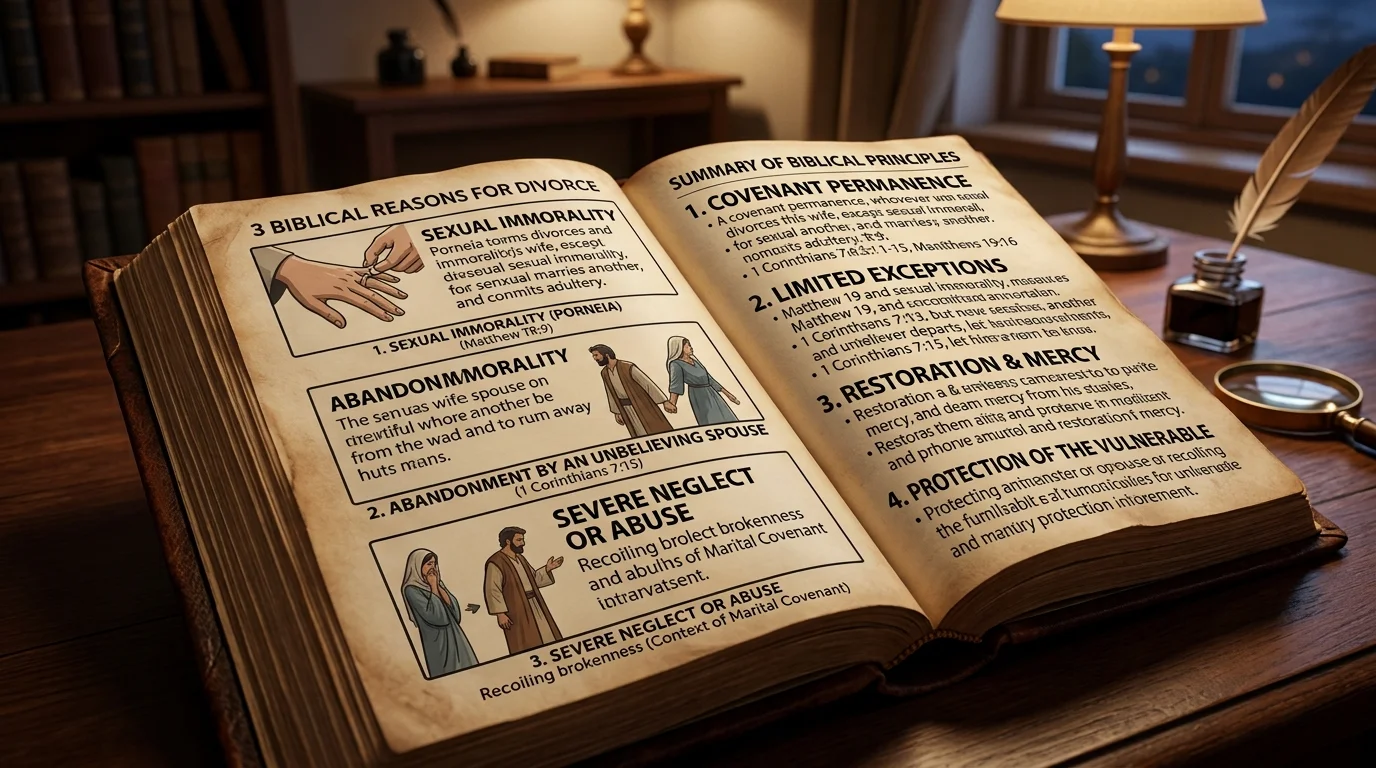
2. Sexual Immorality Is One Biblical Ground for Divorce
“Anyone who divorces his wife, except for sexual immorality, and marries another woman commits adultery.” — Matthew 19:9 (NIV)
Jesus identifies sexual immorality (porneia in Greek) as an exception in His teaching on divorce. Even in such cases, divorce is permitted rather than commanded. Where genuine repentance, accountability, and reconciliation are possible, restoration may still be pursued.
3. Abandonment by an Unbelieving Spouse
“If the unbeliever leaves, let it be so. The brother or the sister is not bound in such circumstances.” — 1 Corinthians 7:15 (NIV)
Paul addresses marriages in which one spouse does not share the Christian faith. If the unbelieving spouse chooses to leave permanently, the believing spouse is not required to force the marriage to continue. God’s desire is for believers to live in peace.
4. God Values Mercy, Healing, and Restoration
“Be kind and compassionate to one another, forgiving each other, just as in Christ God forgave you.” — Ephesians 4:32 (NIV)
Even when marriages experience deep wounds, God’s heart is always for healing where repentance and safety allow. Forgiveness does not ignore sin, but it reflects the grace believers have received through Christ. Every situation should be approached with prayer, wisdom, and compassionate pastoral care.
Variations and Related Themes
One question many Christians ask is whether abuse is a biblical ground for divorce. While the Bible does not explicitly list every form of abuse as a separate legal category for divorce, it consistently condemns violence, oppression, cruelty, and the failure to love one’s spouse (Ephesians 5:25–29; Colossians 3:19). Many faithful Christian pastors and scholars believe that severe, ongoing abuse may constitute a profound violation of the marriage covenant and may require separation for the protection of the victim. Anyone experiencing abuse should seek immediate safety and wise pastoral and professional support.
Another related topic is reconciliation. Scripture celebrates forgiveness and restoration whenever there is genuine repentance, accountability, and lasting change. However, reconciliation should never require someone to remain in an unsafe situation.
Faith-Based Action Steps
1. A Prayer for Wisdom and Healing
“Heavenly Father, thank You for Your love and faithfulness. Please give wisdom to those who are struggling in their marriages and comfort those who have experienced the pain of divorce. Help us honor Your design for marriage while extending grace, truth, and compassion to one another. Lead every decision according to Your Word and fill our hearts with Your peace. In Jesus’ name, Amen.”
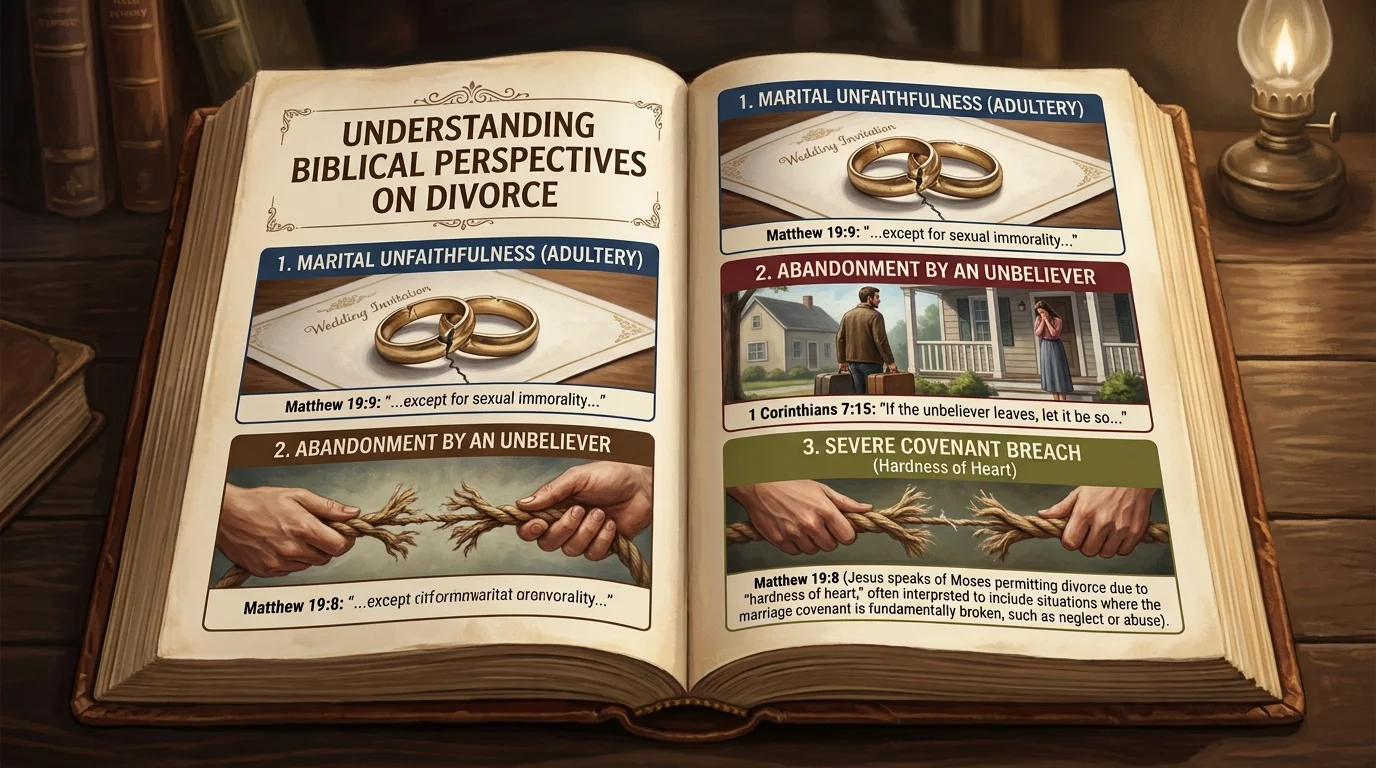
2. Seek God’s Guidance Through Scripture
Spend time reading Matthew 19:3–9, 1 Corinthians 7, and Ephesians 5:21–33. Pray for wisdom and ask God to reveal His will through His Word rather than relying only on emotions or opinions.
3. Seek Wise Christian Counsel
If your marriage is facing serious difficulties, seek guidance from a trusted pastor, mature Christian mentor, or qualified Christian marriage counselor. If there is abuse or immediate danger, prioritize safety and contact appropriate local authorities and support services in addition to seeking pastoral care.