
Biblical Background
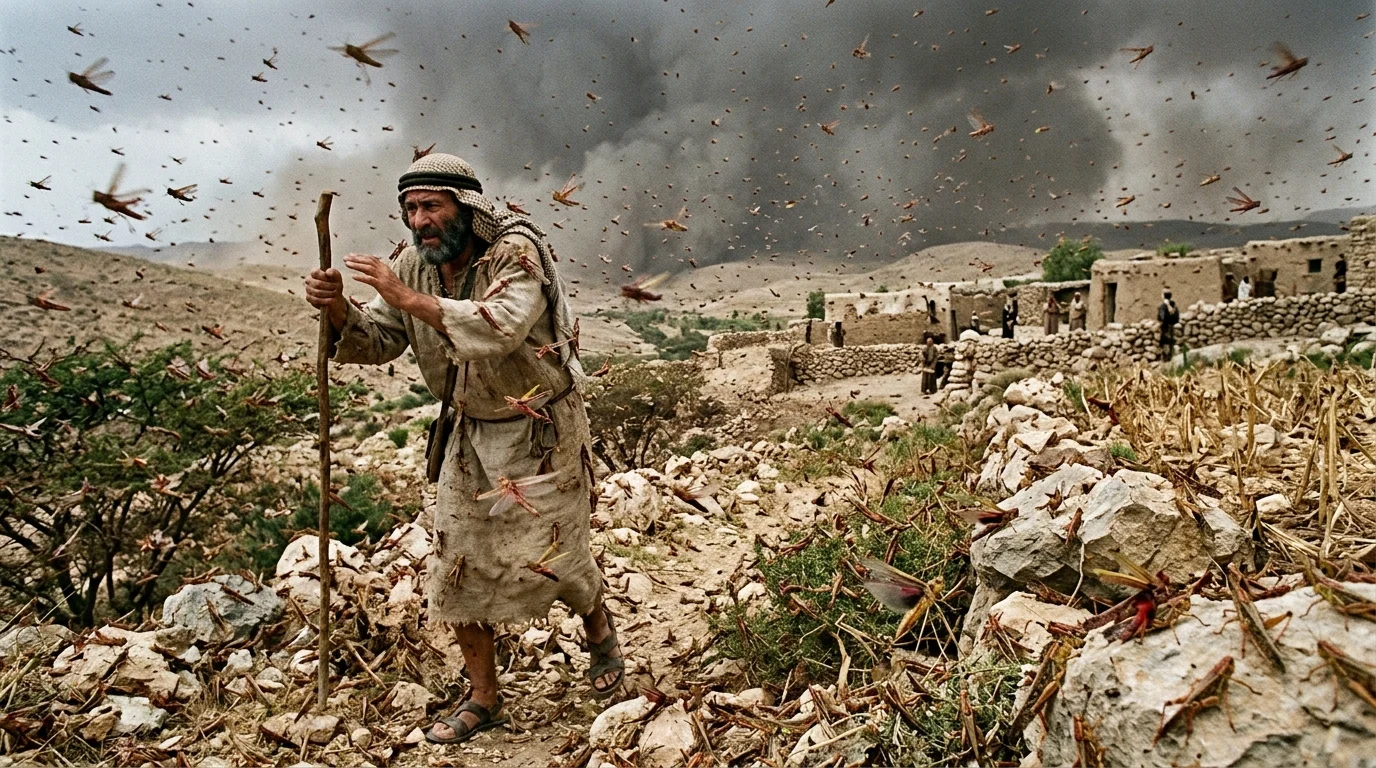
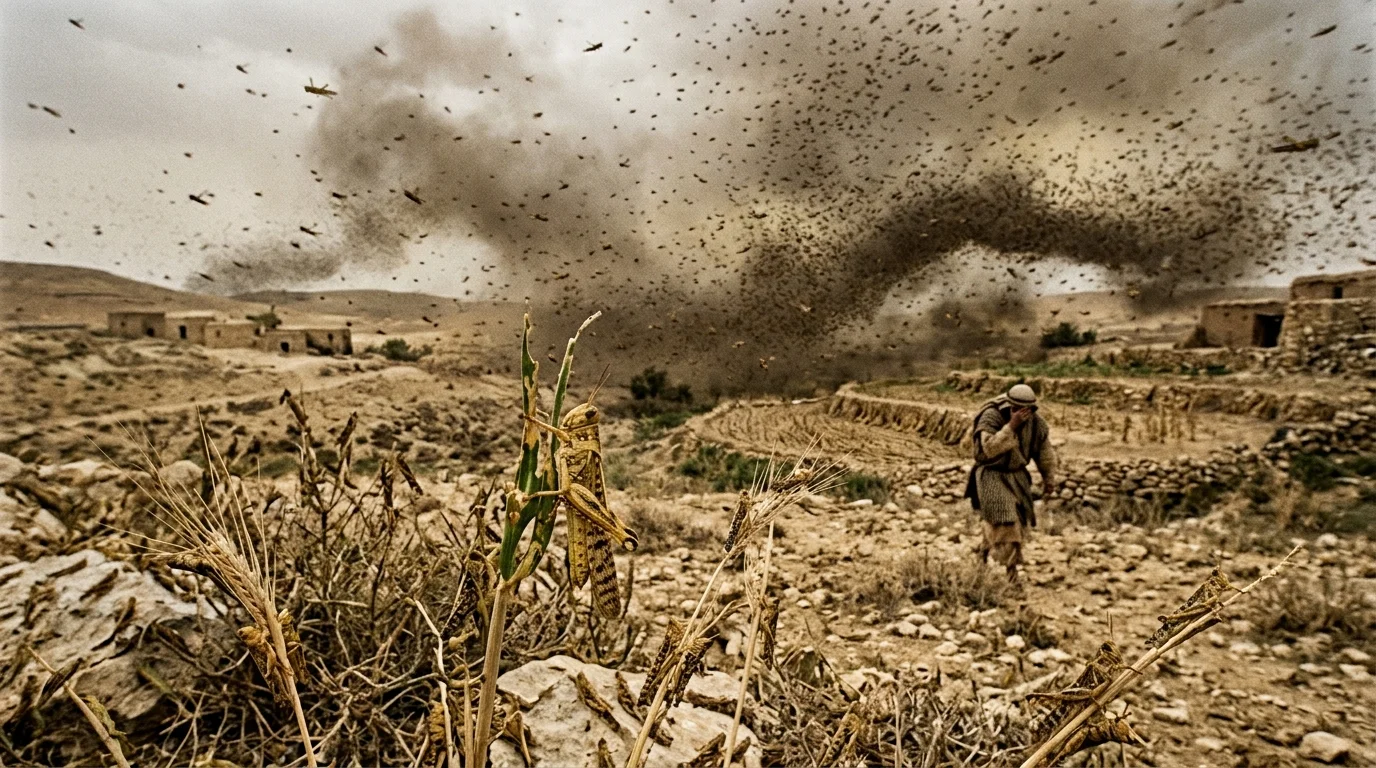
Locusts were well known in the ancient Near East. Large swarms could consume fields, vineyards, and fruit trees within hours, leaving communities without food and threatening their survival. Because agriculture was essential for daily life, a locust invasion was one of the most devastating disasters people could experience.
One of the earliest biblical references appears during the tenth plague cycle in Egypt, where the eighth plague brought countless locusts upon the land because Pharaoh refused to let God’s people go (Exodus 10:12–15). The plague demonstrated God’s authority over creation and His power to deliver Israel.
The prophet Joel later described a devastating locust invasion that served as both a real historical event and a call to repentance (Joel 1:4). Joel urged God’s people to return to the Lord with sincere hearts, promising that God would restore those who turned back to Him.
In the New Testament, John the Baptist ate locusts and wild honey while living in the wilderness (Matthew 3:4), showing a simple lifestyle devoted to God’s calling. The book of Revelation also uses locust-like creatures symbolically in prophetic visions (Revelation 9:3–11), emphasizing God’s sovereignty over history and His final judgment.
Key References From Core Bible Books
The book of Joel is the Bible’s primary source for understanding the spiritual meaning of locusts. Joel 2:25 contains God’s remarkable promise: “I will repay you for the years the locusts have eaten” (NIV). Joel shows that even after seasons of loss, God is able to bring restoration to those who repent and trust Him.
The book of Exodus demonstrates God’s authority through the plague of locusts. Exodus 10:12–15 reveals that the plague was both a judgment against Egypt and a sign of God’s power to rescue His people.
The book of Proverbs uses locusts differently. Proverbs 30:27 observes that “Locusts have no king, yet they advance together in ranks” (NIV). This passage highlights wisdom, order, and cooperation found within God’s creation.
The book of Revelation presents symbolic locust-like creatures in Revelation 9:3–11 as part of prophetic judgment. Revelation reminds readers that God remains sovereign even in the events leading toward the fulfillment of His redemptive plan.
Together, these books reveal that locusts can symbolize judgment, repentance, wisdom, restoration, and God’s sovereign control.
Spiritual Interpretations
1. Locusts Can Represent a Call to Repentance
“Even now,” declares the LORD, “return to me with all your heart.” — Joel 2:12 (NIV)
Joel’s prophecy reminds believers that God often uses difficult circumstances to draw people back to Himself. His goal is not destruction but restoration. A humble and repentant heart always finds mercy with the Lord.
2. God Has the Power to Restore What Was Lost
“I will repay you for the years the locusts have eaten.” — Joel 2:25 (NIV)
This beautiful promise offers hope to anyone who feels they have lost precious years through hardship, failure, or disappointment. While it was originally spoken to Israel after a devastating locust plague, it also reveals God’s gracious character. He delights in restoring those who seek Him.
3. God Is Sovereign Over All Creation
“Stretch out your hand over Egypt so that locusts swarm over the land.” — Exodus 10:12 (NIV)
The plague of locusts demonstrated that nothing in creation operates outside God’s authority. He rules over nature, nations, and history. Believers can trust that even when circumstances seem beyond their control, God remains faithful and sovereign.
4. Wisdom Includes Walking Together in Unity
“Locusts have no king, yet they advance together in ranks.” — Proverbs 30:27 (NIV)
This proverb points to the wisdom found in cooperation and order. Christians are called to serve together as the body of Christ, encouraging one another and working in unity to fulfill God’s purposes.
Variations and Related Themes
Not every mention of locusts carries the same meaning. In Exodus, they are a literal plague demonstrating God’s judgment on Egypt. In Joel, they represent both a historical disaster and a prophetic call to repentance, followed by God’s promise of restoration. In Proverbs, locusts illustrate wisdom observed in creation, while Revelation uses symbolic locust-like creatures within apocalyptic visions.
These different contexts remind readers to interpret each passage carefully rather than assuming every reference has the same message. Throughout Scripture, the surrounding context reveals whether locusts symbolize judgment, restoration, wisdom, or prophetic imagery.
Faith-Based Action Steps
1. A Prayer for Renewal
“Heavenly Father, thank You for being gracious, compassionate, and faithful. When I experience seasons of loss or hardship, help me trust Your wisdom and seek You with my whole heart. Restore what has been broken according to Your perfect will, and teach me to walk faithfully in obedience every day. In Jesus’ name, Amen.”
2. Reflect on God’s Restoring Power
Read Joel 2:12–27 slowly and prayerfully. Ask yourself if there are areas of your life where God is inviting you to return to Him more fully. Write down His promises of mercy and restoration, and thank Him for His faithfulness.
3. Walk Forward in Faith and Community
Remember that God often restores His people through faithful obedience and supportive Christian community. Stay connected to your local church, seek wisdom from mature believers, and continue trusting God’s timing even when restoration takes longer than expected.