
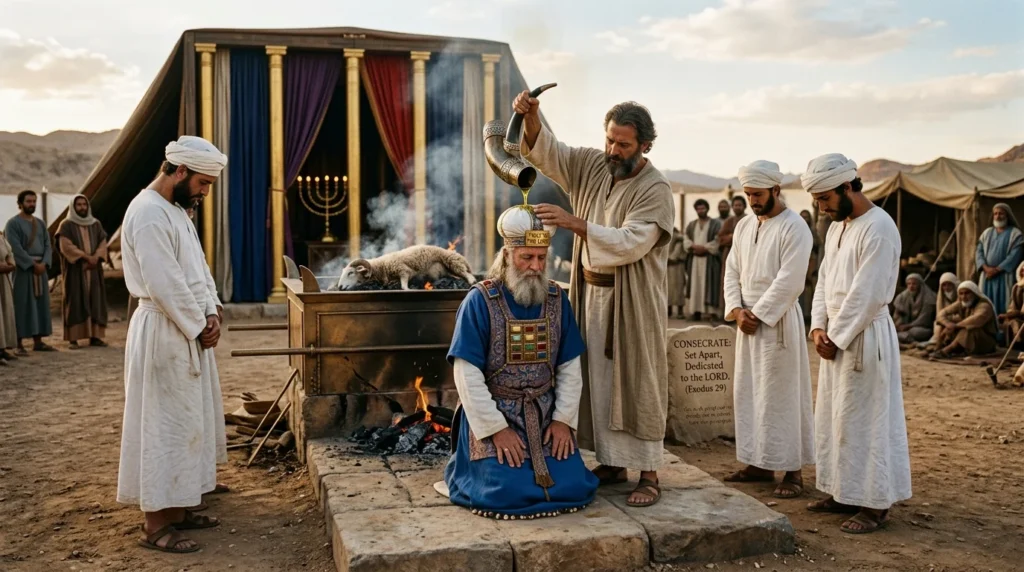
Many Christians encounter the word consecrate while reading Scripture and wonder what it actually means. If you’re asking, “What does consecrate mean in the Bible?”, the short answer is that to consecrate means to set apart for God’s special purpose. It involves dedicating a person, place, object, or even an entire life to the Lord.
Throughout the Bible, God called His people to consecrate themselves before important moments of worship, service, and spiritual renewal. Priests were consecrated for ministry, the tabernacle and temple were consecrated for worship, and believers were called to live holy lives devoted to God.
Consecration is not merely a religious ceremony. It is an act of surrender that acknowledges God’s ownership and invites His presence and purpose into every area of life.
Let’s explore the biblical meaning of consecration, where the word appears in Scripture, and what it means for Christians today.
What Does “Consecrate” Mean?
The biblical idea of consecration comes from Hebrew and Greek words that carry the meaning of:
To set apart
To dedicate
To make holy
To devote to God
To prepare for sacred service
In simple terms, consecration means separating something from ordinary use and dedicating it to God’s purposes.
The Hebrew Meaning of Consecrate
One important Hebrew word translated “consecrate” is qadash, which means “to be holy” or “to set apart as sacred”.
This word is used when God instructed Israel to prepare themselves for worship or service.
Exodus 19:10 (NIV)
“Go to the people and consecrate them today and tomorrow.”
Before God gave the Ten Commandments at Mount Sinai, the people were told to consecrate themselves.
The Greek Meaning of Consecrate
In the New Testament, a common Greek word related to consecration is hagiazo, meaning “to sanctify” or “to make holy”.
Jesus used this language when speaking of dedicating Himself to the Father’s mission.
John 17:19 (NIV)
“For them I sanctify myself, that they too may be truly sanctified.”
Who Was Consecrated in the Bible?
Priests
Exodus 28–29 describes the consecration of Aaron and his sons for priestly ministry.
The Tabernacle
The tabernacle and its furnishings were consecrated for worship.
The Temple
Solomon dedicated and consecrated the temple for God’s presence.
The People of Israel
Israel was repeatedly called to consecrate themselves before encountering God.
Jesus Christ
Jesus set Himself apart to accomplish the Father’s redemptive plan.
Believers
Christians are called to live consecrated lives through faith and obedience.
Key Bible Verses About Consecration
Joshua 3:5
“Consecrate yourselves, for tomorrow the LORD will do amazing things among you.” (NIV)
Consecration prepared Israel to witness God’s power.
Leviticus 20:7–8
“Consecrate yourselves and be holy, because I am the LORD your God.” (NIV)
God connected consecration with holiness and obedience.
Romans 12:1
“Offer your bodies as a living sacrifice, holy and pleasing to God.” (NIV)
This New Testament passage describes a life fully dedicated to God.
1 Peter 1:15–16
“Be holy in all you do.” (NIV)
Believers are called to reflect God’s holiness in everyday life.
2 Timothy 2:21
“An instrument for special purposes, made holy, useful to the Master.” (NIV)
Consecration makes believers useful for God’s work.
What Does Consecration Look Like Today?
For Christians, consecration is not usually a formal ritual involving sacrifices or temple ceremonies. Instead, it involves a heart and life surrendered to God.
A consecrated life includes:
Turning away from sin.
Seeking God’s will.
Living in obedience.
Using our gifts for His glory.
Devoting time to prayer and Scripture.
Honoring God in our relationships and decisions.
Allowing the Holy Spirit to transform our character.
Why Did God Command Consecration?
Consecration served several purposes in Scripture:
Purpose | Meaning |
|---|---|
Preparation | Getting ready to encounter God |
Holiness | Reflecting God’s character |
Service | Being available for God’s work |
Worship | Honoring God with devotion |
Separation | Being distinct from sinful practices |
Dedication | Belonging fully to the Lord |
Consecration vs. Sanctification
Consecration | Sanctification |
|---|---|
Setting apart for God | Growing in holiness |
A deliberate act of dedication | An ongoing process |
Can happen at a specific moment | Continues throughout the Christian life |
Focuses on surrender | Focuses on transformation |
These concepts are closely related. When believers consecrate themselves to God, the Holy Spirit continues the work of sanctifying them.
Examples of Consecration in the Bible
Joshua and Israel
Before crossing the Jordan River, the people consecrated themselves (Joshua 3:5).
Aaron the High Priest
Aaron was consecrated through washing, anointing, and sacrifice (Exodus 29).
Samuel
Hannah dedicated Samuel to the Lord from childhood (1 Samuel 1:27–28).
Jesus
Jesus consecrated Himself for the salvation of humanity (John 17:19).
A Prayer of Consecration
Prayer
“Heavenly Father, I consecrate my life to You today. Set apart my thoughts, words, actions, and desires for Your purposes. Help me turn away from sin and walk in holiness through the power of the Holy Spirit. Use my life for Your glory and make me an instrument of Your peace, love, and truth. Teach me to follow Your will and trust Your guidance each day. In Jesus’ name, Amen.”
Conclusion
So, what does consecrate mean in the Bible? It means to be set apart for God, dedicated to His service, and devoted to His holy purposes. From the priests of Israel to the followers of Jesus, Scripture consistently calls God’s people to live lives that belong fully to Him.
Consecration is not about perfection; it is about surrender. It is a willing response to God’s grace that says, “Lord, my life is Yours.” As believers consecrate themselves to Him, He works through the Holy Spirit to transform their hearts and use them for His glory.
May Romans 12:1 guide your heart today:
“Offer your bodies as a living sacrifice, holy and pleasing to God—this is your true and proper worship.” (NIV)
As you dedicate your life to the Lord, may He fill you with wisdom, holiness, and a deeper desire to serve Him faithfully every day.