

Biblical Background
While the Bible does not specifically mention Bible journaling, it frequently encourages God’s people to remember His works, meditate on His Word, and record His faithfulness.
Throughout the Old Testament, God instructed His people to remember His mighty acts. Moses wrote down God’s laws, the Psalms were recorded as prayers and songs of worship, and the prophets faithfully documented God’s messages for future generations. Habakkuk was told, “Write down the revelation and make it plain” (Habakkuk 2:2), emphasizing the importance of recording God’s truth.
In the New Testament, believers are encouraged to meditate on Scripture and allow God’s Word to dwell richly within them (Colossians 3:16). Writing notes, prayers, reflections, or artistic responses alongside biblical passages can become one practical way of applying these principles.
Bible journaling is not a spiritual requirement, nor does it replace careful Bible study. Instead, it is a creative method many Christians use to slow down, reflect on Scripture, and remember God’s faithfulness more deeply.
Key References From Core Bible Books
The book of Psalms repeatedly calls believers to meditate on God’s Word day and night. Psalm 119:15 says, “I meditate on your precepts and consider your ways” (NIV), encouraging thoughtful reflection on Scripture.
The book of Joshua instructs God’s people to continually meditate on His Word. Joshua 1:8 teaches that God’s instructions should remain continually before His people as they seek to live faithfully.
The book of Habakkuk emphasizes recording God’s revelation. Habakkuk 2:2 encourages writing God’s message clearly so it can be remembered and shared.
The book of Colossians reminds believers to let Christ’s Word dwell richly within them. Colossians 3:16 encourages Scripture-centered worship, teaching, and encouragement that naturally align with thoughtful Bible journaling.
Together, these passages reveal the importance of remembering, reflecting on, and treasuring God’s Word.
Essential Bible Journaling Supplies

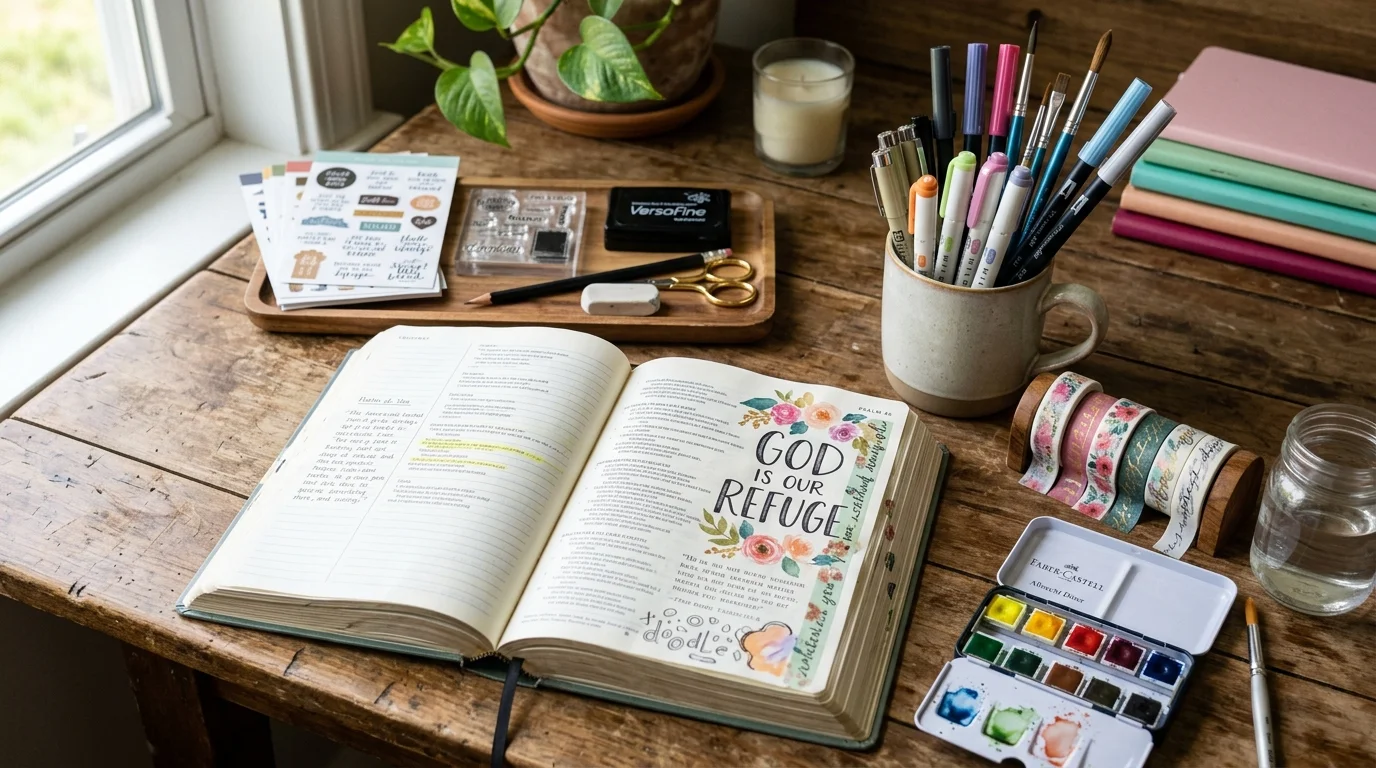
1. A Journaling Bible
The most important supply is a Bible designed for journaling. Many editions include wide margins where you can write notes, prayers, or illustrations without covering the biblical text.
Popular choices include:
- Single-column journaling Bibles
- Interleaved journaling Bibles
- Wide-margin Bibles
- Inspire Bible (NLT)
- ESV Journaling Bible
- CSB Notetaking Bible
Choose a translation you enjoy reading consistently.
2. Bible-Safe Pens
Pens designed for thin Bible paper reduce the chance of bleeding through pages.
Good options include:
- Archival ink pens
- Fine-tip black pens
- Pigment liners
- Waterproof journaling pens
3. Colored Pencils
Colored pencils are one of the safest choices for Bible journaling because they rarely bleed through thin pages.
They work well for:
- Coloring illustrations
- Highlighting themes
- Underlining verses
- Creating borders
4. Bible Highlighters
Special Bible highlighters use gel or low-bleed ink to protect delicate pages.
Many journalers use different colors to mark themes such as:
- God’s promises
- Prayer
- Salvation
- Faith
- Hope
- Love
5. Washi Tape
Decorative washi tape adds color and helps mark favorite passages without damaging Bible pages.
6. Sticky Notes and Page Tabs
These are useful for:
- Prayer requests
- Study notes
- Scripture memory
- Marking important passages
7. Stencils
Lettering and illustration stencils help beginners create neat designs without advanced artistic skills.
8. Stickers
Faith-themed stickers can decorate journal pages while emphasizing biblical themes.
9. Watercolor Supplies
Some journaling Bibles handle light watercolor well.
Use:
- Water brushes
- Light watercolor paints
- Minimal water to reduce page wrinkling
Always test materials on a spare page first.
10. Storage Organizer
Keeping supplies organized makes Bible journaling easier and encourages consistent use.
Optional Creative Supplies
As you grow more comfortable with Bible journaling, you might enjoy adding:
- Alphabet stamps
- Acrylic blocks
- Ink pads
- Brush pens
- Mildliner markers
- Gel pens
- White paint pens
- Rubber stamps
- Decorative paper
- Printable journaling cards
Remember that these extras are optional. Beautiful Bible journaling does not depend on having many supplies.
Choosing the Right Supplies
When selecting Bible journaling materials, consider:
- Low bleed-through
- Acid-free or archival quality
- Comfortable grip
- Ease of use
- Your preferred artistic style
- Budget
Start with only a few quality supplies rather than purchasing everything at once.
Bible Journaling Ideas
You can use your supplies to:
- Highlight meaningful verses.
- Write prayers beside passages.
- Record answered prayers.
- Draw simple illustrations.
- Create verse maps.
- Add sermon notes.
- Practice hand lettering.
- Record personal testimonies.
- Write gratitude lists.
- Memorize Scripture.
Every page becomes a personal record of God’s work in your life.
Spiritual Interpretations
1. God’s Word Deserves Our Attention
Bible journaling encourages believers to slow down and thoughtfully engage with Scripture instead of reading quickly without reflection.
2. Creativity Can Be an Act of Worship
God is the Creator, and creative expression can become a beautiful response to His truth when it points our hearts toward Him rather than ourselves.
3. Remembering Strengthens Faith
Writing prayers, insights, and answered prayers creates a lasting testimony of God’s faithfulness that can encourage you during future seasons.
4. The Heart Matters Most
God is not impressed by artistic ability but by sincere devotion. A simple written prayer can honor Him just as much as an elaborate illustrated page.
Variations and Related Themes
Bible journaling connects naturally with themes such as Scripture meditation, prayer journaling, Christian creativity, Bible study methods, gratitude journals, and Scripture memory. Some believers focus on artistic illustrations, while others simply write reflections, sermon notes, or personal prayers in the margins of their Bibles.
Related passages include Psalm 1:2, Psalm 119:105, Joshua 1:8, James 1:22, and 2 Timothy 3:16–17. Together, these Scriptures remind believers that the goal is not merely to collect beautiful journal pages but to know God more deeply and obey His Word.
Faith-Based Action Steps
1. A Prayer Before Bible Journaling
“Heavenly Father, thank You for the gift of Your Word. As I read and reflect on Scripture, help me understand Your truth through the guidance of the Holy Spirit. May every note I write and every creative expression draw me closer to You and strengthen my faith. Teach me to treasure Your Word above all else and to live according to what I learn. In Jesus’ name, Amen.”
2. Begin With One Chapter
Choose one chapter from the Gospels or Psalms. Highlight one verse that speaks to your heart, write a short prayer beside it, and record one practical lesson you can apply this week.
3. Keep Your Focus on Christ
Remember that Bible journaling is a tool—not the goal. Let every page point you back to Jesus, encouraging worship, obedience, and a growing love for God’s Word.