

Biblical Background
Colors played an important role in Israel’s worship and religious life. God gave detailed instructions regarding the colors used in the tabernacle, the high priest’s garments, and the furnishings of the sanctuary. These colors were not chosen randomly; they reflected God’s holiness, kingship, glory, and covenant relationship with His people.
The prophets also used colorful imagery in visions to communicate spiritual truths. Likewise, the book of Revelation contains vivid descriptions of precious stones, white robes, scarlet beasts, and the brilliant glory surrounding God’s throne.
Throughout Scripture, colors often function as visual symbols rather than hidden codes. Their meaning depends on the surrounding passage and the purpose for which they are used. For example, white garments frequently symbolize purity and victory, while scarlet can represent either sin or royal splendor depending on the context.
Understanding these biblical patterns helps readers appreciate the richness of Scripture without reading more into the text than God intended.
Key References From Core Bible Books
The book of Exodus describes the colors used in the tabernacle and the high priest’s garments, including blue, purple, scarlet, and gold. These colors reflected the beauty and holiness of worship.
The book of Isaiah uses color symbolically when describing sin and forgiveness. Isaiah 1:18 declares that though sins are like scarlet, they shall become white as snow through God’s cleansing grace.
The Gospels record Jesus being dressed in a purple robe during His trial, symbolizing the mockery of His kingship while also pointing to His true identity as King.
The book of Revelation frequently uses colors such as white, gold, emerald, and crimson to portray God’s glory, victory, judgment, and eternal kingdom.
Together, these passages reveal how colors help communicate important biblical truths.
Spiritual Interpretations

1. White — Purity, Holiness, and Victory
“Though your sins are like scarlet, they shall be as white as snow.” — Isaiah 1:18 (NIV)
White is one of the most frequently used symbolic colors in Scripture. It often represents purity, righteousness, forgiveness, and victory. In Revelation, believers wear white robes as a symbol of being cleansed through Christ.
2. Purple — Royalty and Kingship
Purple was an expensive color in the ancient world and was associated with kings and nobility. Jesus was clothed in a purple robe before His crucifixion (Mark 15:17–20). Although intended as mockery, it also pointed to His true identity as the King of kings.
3. Scarlet or Red — Sacrifice, Sin, and Redemption
Scarlet appears in different ways throughout Scripture. It can symbolize sin (Isaiah 1:18), but it is also associated with sacrifice, atonement, and redemption through the shedding of blood. Context determines which meaning is intended.
4. Blue — Heaven and God’s Presence
Blue was prominently used in the tabernacle, priestly garments, and temple furnishings (Exodus 26–28). It often reminds readers of God’s heavenly rule, holiness, and His covenant relationship with His people.
5. Gold — God’s Glory and Majesty
Gold frequently appears in the tabernacle, Solomon’s temple, and heavenly visions. It symbolizes God’s glory, kingship, purity, and incomparable worth.
6. Green — Life, Growth, and God’s Provision
Green pastures in Psalm 23 represent God’s loving care, provision, rest, and spiritual nourishment for His people.
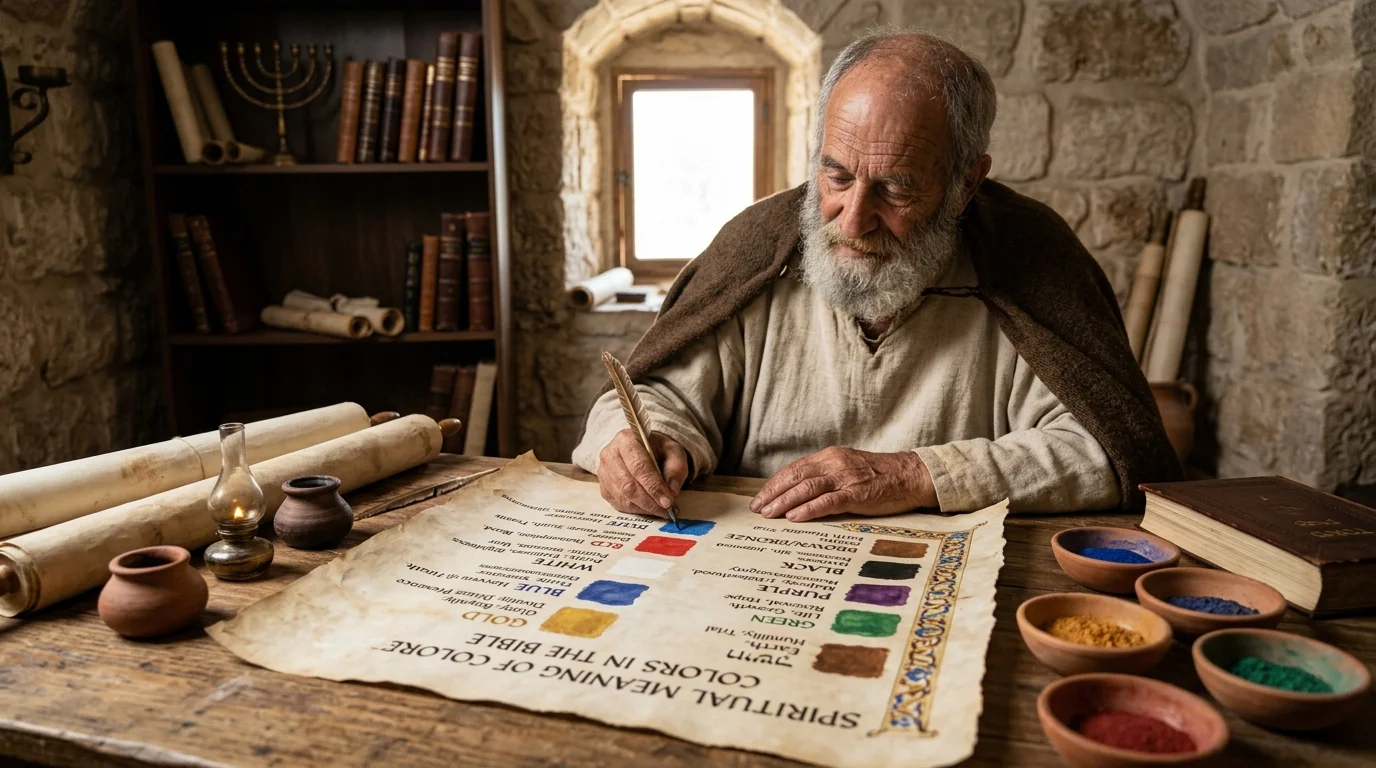
Common Biblical Colors and Their Symbolism
| Color | Common Biblical Symbolism | Key References |
|---|---|---|
| White | Purity, holiness, victory | Isaiah 1:18; Revelation 7:9 |
| Purple | Royalty, kingship | Mark 15:17; John 19:2 |
| Scarlet / Red | Sin, sacrifice, redemption | Isaiah 1:18; Hebrews 9:22 |
| Blue | Heaven, holiness, covenant | Exodus 26–28 |
| Gold | Glory, majesty, divine presence | Exodus 25; Revelation 21 |
| Green | Life, peace, provision | Psalm 23:2 |
| Black | Mourning, famine, judgment (in some contexts) | Lamentations 5:10; Revelation 6:5 |
| Emerald | Beauty and God’s glory | Revelation 4:3 |
These meanings reflect recurring biblical themes, but no color has exactly the same meaning in every passage.
Variations and Related Themes
The spiritual meaning of colors is closely connected with themes such as God’s holiness, worship, redemption, heaven, the tabernacle, the temple, and the book of Revelation. Some Christian traditions place greater emphasis on color symbolism than others, while many Bible scholars encourage readers to interpret colors according to their immediate biblical context.
It is also important to avoid assigning mystical meanings to every color or assuming that every occurrence carries symbolic significance. Sometimes a color is simply describing an object or scene. Sound biblical interpretation always begins with the context of the passage rather than personal speculation.
Related passages include Exodus 28, Psalm 23, Isaiah 1, Hebrews 9, and Revelation 4–7, all of which help readers understand how colors are used within God’s unfolding plan of redemption.
Faith-Based Action Steps
1. A Prayer for Spiritual Understanding
“Heavenly Father, thank You for the richness and beauty of Your Word. As I study Scripture, help me understand its symbols according to Your truth rather than my own ideas. Give me wisdom to see how every part of the Bible points to Jesus Christ and Your plan of salvation. May Your Word deepen my faith and strengthen my relationship with You. In Jesus’ name, Amen.”
2. Study Colors in Context
When you notice a color in Scripture, read the surrounding chapter and ask:
- Why is this color mentioned?
- What is happening in the passage?
- What does it reveal about God or His purposes?
Allow the context to guide your understanding.
3. Focus on Christ Above Symbolism
Biblical symbols are valuable because they point beyond themselves to God’s truth. As you study the colors of Scripture, let them deepen your appreciation for Christ’s holiness, kingship, sacrifice, and eternal glory rather than becoming the center of your study.