
Biblical Background
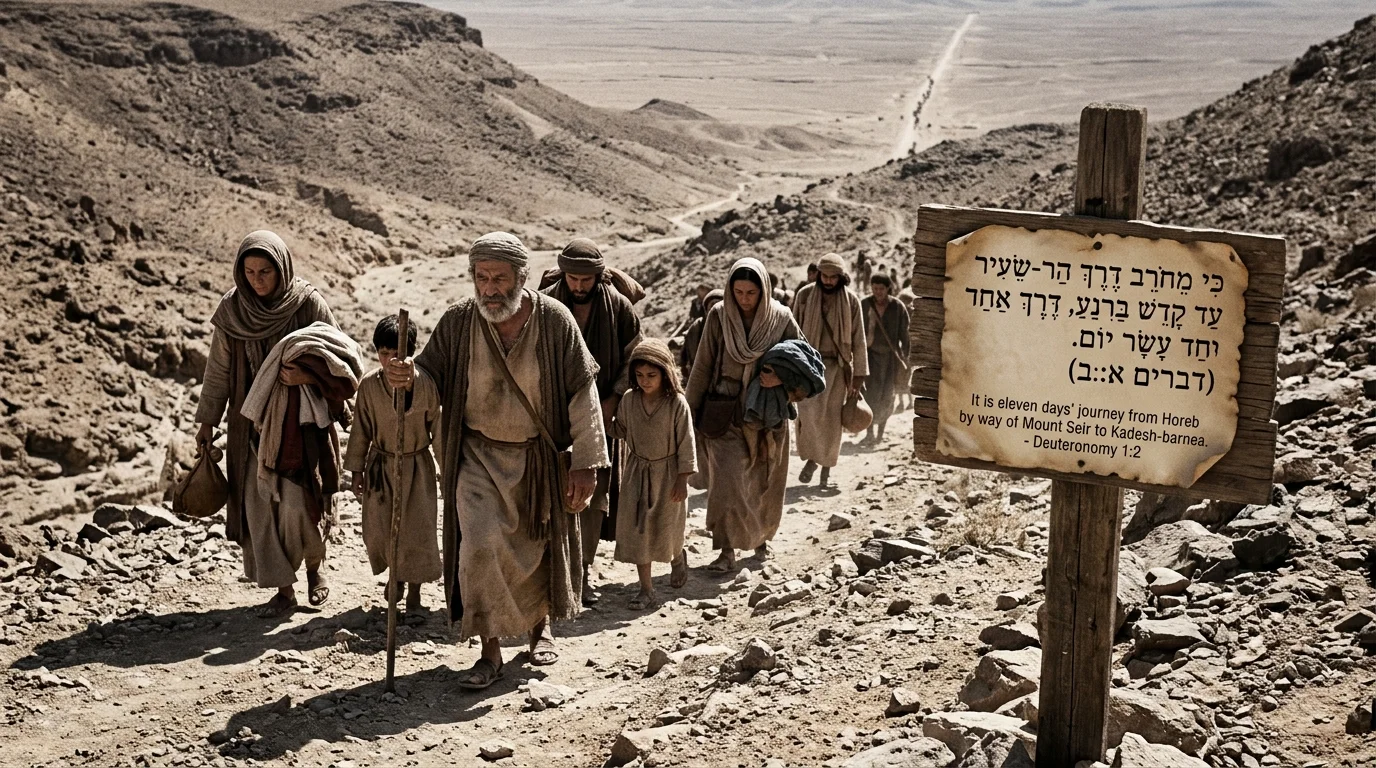
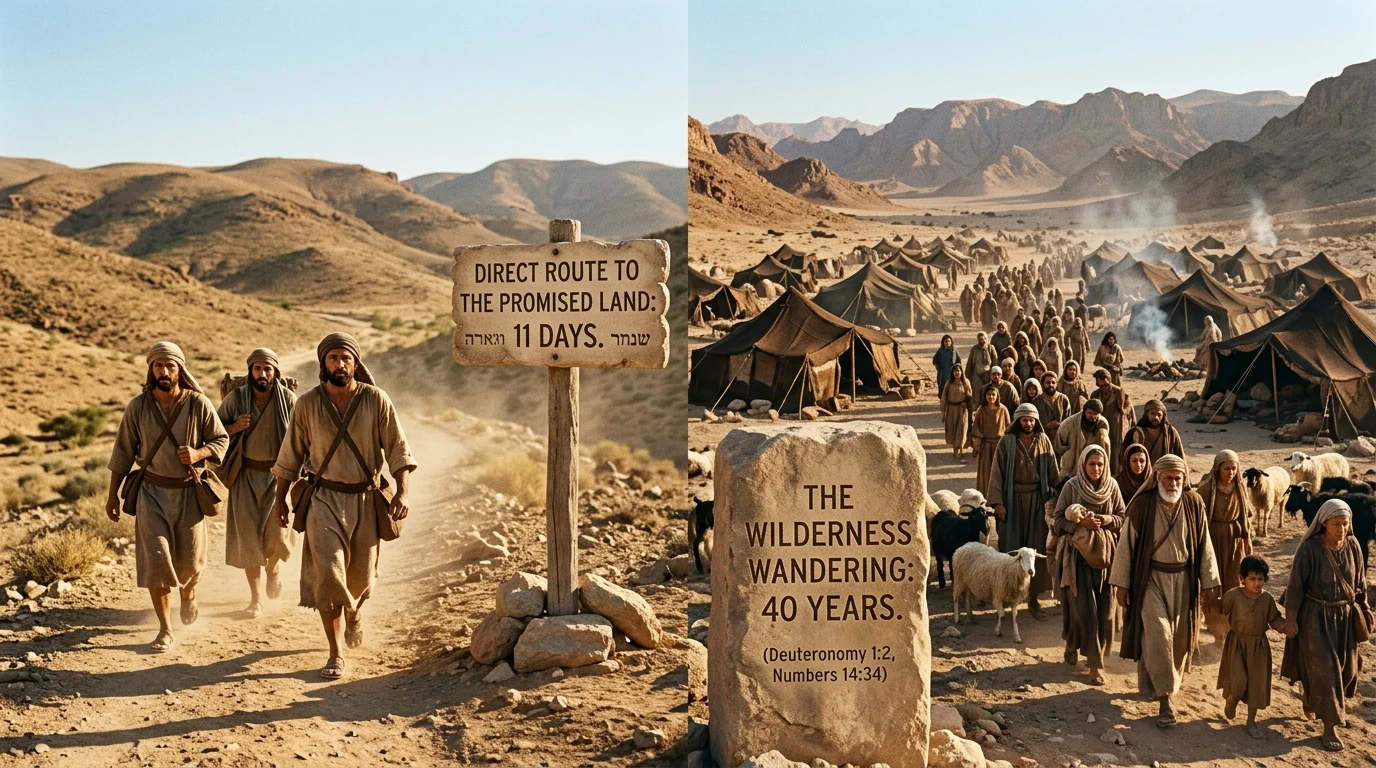
After God delivered Israel from Egypt through the Exodus, He led His people toward the land He had promised to Abraham, Isaac, and Jacob. The normal journey from Mount Horeb (Sinai) to Kadesh Barnea—the gateway to the Promised Land—could be completed in eleven days.
This is stated clearly in:
“It takes eleven days to go from Horeb to Kadesh Barnea by the Mount Seir road.” — Deuteronomy 1:2 (NIV)
When the Israelites reached Kadesh Barnea, Moses sent twelve spies to explore Canaan (Numbers 13). Ten of the spies returned with a fearful report, focusing on the strength of the inhabitants rather than God’s promises.
Although Joshua and Caleb trusted the Lord, the majority of the people believed the negative report. They refused to enter the land, complained against Moses, and questioned God’s faithfulness.
Because of this rebellion, God declared that the adult generation who had refused to trust Him would not enter the Promised Land. Instead, they would wander in the wilderness until that generation had passed away.
Key References From Core Bible Books
The book of Deuteronomy explains that the journey from Horeb to Kadesh Barnea normally took eleven days (Deuteronomy 1:2).
The book of Numbers records the spies’ mission, Israel’s rebellion, and God’s judgment in Numbers 13–14.
The book of Psalms reflects on Israel’s repeated unbelief and God’s enduring faithfulness despite their disobedience.
The New Testament book of Hebrews uses Israel’s wilderness experience as a warning, encouraging believers not to harden their hearts but to trust God’s promises (Hebrews 3–4).
Together, these passages explain why the journey lasted forty years and why it remains an important lesson for Christians today.
Why Did the Journey Take 40 Years?
1. Israel Refused to Trust God’s Promise
“How long will they refuse to believe in me?” — Numbers 14:11 (NIV)
After witnessing miracles in Egypt, crossing the Red Sea, and receiving God’s daily provision, the Israelites still doubted His ability to give them victory in Canaan.
Their fear became greater than their faith.
2. They Rejected God’s Command
God instructed Israel to enter the land He had already promised them.
Instead, they refused.
Their rebellion was not simply fear—it was disobedience.
3. God Disciplined an Unbelieving Generation
“For forty years—one year for each of the forty days you explored the land—you will suffer for your sins.” — Numbers 14:34 (NIV)
The spies spent forty days exploring Canaan.
As part of God’s judgment, the nation wandered forty years until the unbelieving generation had died.
Only Joshua and Caleb, who trusted God, entered the Promised Land from that generation.
4. God Continued to Care for Them
Although Israel experienced discipline, God never abandoned them.
During those forty years He:
- Provided manna from heaven.
- Supplied water in the wilderness.
- Guided them by the pillar of cloud and fire.
- Protected their clothing and sandals from wearing out (Deuteronomy 8:4).
God’s discipline always existed alongside His faithful provision.
Spiritual Interpretations
1. Unbelief Can Delay Spiritual Growth
Israel’s greatest obstacle was not the giants in Canaan but the unbelief in their own hearts.
Likewise, believers today can hinder their spiritual growth when fear replaces trust in God’s promises.
2. God Uses Wilderness Seasons to Shape His People
The wilderness became a place where God taught Israel dependence, humility, and obedience.
Sometimes God uses difficult seasons to deepen our faith and prepare us for future blessings.
3. God’s Discipline Is Loving
“Know then in your heart that as a man disciplines his son, so the LORD your God disciplines you.” — Deuteronomy 8:5 (NIV)
God’s discipline was never meant to destroy Israel.
It was intended to correct them and reveal His holiness.
4. God’s Promises Never Fail
Although one generation missed entering Canaan, God’s promise itself never failed.
He fulfilled His covenant through the next generation under Joshua’s leadership.
Variations and Related Themes
The 40-year wilderness journey is closely connected with themes such as faith, obedience, God’s discipline, trust, perseverance, and spiritual growth. The number forty often appears in the Bible during periods of testing or preparation. Examples include Moses’ forty days on Mount Sinai, Elijah’s forty-day journey, Jesus’ forty days in the wilderness, and the forty days between Jesus’ resurrection and ascension.
The New Testament especially points to Israel’s wilderness experience as a lesson for believers. Hebrews 3–4 urges Christians not to repeat Israel’s mistake of unbelief but to continue trusting God’s promises with faithful obedience.
Faith-Based Action Steps
1. A Prayer for Trust
“Heavenly Father, thank You for always keeping Your promises. Forgive me for the times I allow fear, doubt, or impatience to replace my trust in You. Strengthen my faith so that I will follow Your guidance with confidence and obedience. Help me learn the lessons You desire to teach me, even during difficult seasons, and remind me that Your plans are always good. In Jesus’ name, Amen.”
2. Read the Full Account
Read Numbers 13–14, Deuteronomy 1, and Hebrews 3–4. Notice the contrast between the unbelief of the ten spies and the faith of Joshua and Caleb. Ask God to help you respond to challenges with the same confidence they demonstrated.
3. Choose Faith Over Fear
Identify one area where fear may be keeping you from obeying God. Pray specifically about that situation and take one practical step of faith, trusting that the Lord will guide and strengthen you.
Frequently Asked Questions
Where does the Bible say it was an 11-day journey?
Deuteronomy 1:2 states:
“It takes eleven days to go from Horeb to Kadesh Barnea by the Mount Seir road.” (NIV)
This refers to the normal travel time between those locations.
Why did God make Israel wander for 40 years?
According to Numbers 14:26–35, the forty years were a judgment for Israel’s unbelief and refusal to enter the Promised Land after the spies’ report.
Why did Joshua and Caleb enter the Promised Land?
Because they trusted God’s promise when the other ten spies did not (Numbers 14:24, 30).
What can Christians learn from the 40-year wilderness?
The wilderness teaches believers to trust God’s promises, obey His Word, persevere through testing, and remember that God remains faithful even while disciplining His people.