Biblical Background
The Bible is divided into two main sections: the Old Testament and the New Testament. The Old Testament prepares the way for the coming of the Messiah by telling the story of creation, God’s covenant with Israel, and His promises of redemption. The New Testament reveals the fulfillment of those promises through Jesus Christ.
Although Genesis comes first chronologically, many new believers benefit from beginning with the Gospels because they introduce Jesus, His teachings, His miracles, His death, and His resurrection. Understanding Christ makes the rest of Scripture much easier to understand.
Jesus Himself explained that the Scriptures point to Him. In Luke 24:27, after His resurrection, He explained to His disciples “what was said in all the Scriptures concerning himself” (NIV). This reminds us that every book of the Bible ultimately fits into God’s plan of salvation.
Rather than rushing through the Bible, read thoughtfully, pray for understanding, and allow God’s Word to shape your heart one passage at a time.
Key References From Core Bible Books
The Gospel of John is often the best starting point because it clearly presents who Jesus is. John 20:31 explains that the book was written so readers may believe that Jesus is the Christ and have life in His name.
The book of Proverbs offers practical wisdom for everyday living. Reading one chapter each day helps first-time readers apply biblical principles to relationships, decisions, and daily choices. Proverbs 3:5–6 encourages complete trust in the Lord.
The book of Psalms teaches believers how to pray, worship, and bring every emotion before God. Psalm 119:105 reminds us that God’s Word is “a lamp for my feet, a light on my path” (NIV).
The book of Romans explains the heart of the Christian faith. Romans 5:8 reveals God’s love through Christ’s sacrifice, while the entire letter helps readers understand salvation by grace through faith.
These books provide a balanced introduction to Jesus, practical wisdom, worship, and the core message of the gospel.
Spiritual Interpretations
1. Begin With Jesus
“I am the way and the truth and the life. No one comes to the Father except through me.” — John 14:6 (NIV)
Reading the Gospels first helps you know the person at the center of the Christian faith. As you learn about Jesus’ compassion, teaching, miracles, and sacrifice, the rest of the Bible begins to make greater sense.

2. Let God’s Word Guide Your Daily Life
“Your word is a lamp for my feet, a light on my path.” — Psalm 119:105 (NIV)
The Bible is more than a history book. It provides wisdom for everyday decisions, relationships, and challenges. Reading consistently allows God’s truth to shape your thoughts and actions over time.
3. Grow Through Trust and Obedience
“Trust in the LORD with all your heart and lean not on your own understanding.” — Proverbs 3:5 (NIV)
Some passages may seem difficult at first. Instead of becoming discouraged, continue reading with humility and prayer. God gradually gives understanding as you faithfully spend time in His Word.
4. Read to Be Transformed
“Do not merely listen to the word, and so deceive yourselves. Do what it says.” — James 1:22 (NIV)
Bible reading is not only about gaining knowledge. God’s desire is to transform your heart. As you apply what you learn, your faith grows stronger and your relationship with Christ becomes deeper.
Variations and Related Themes
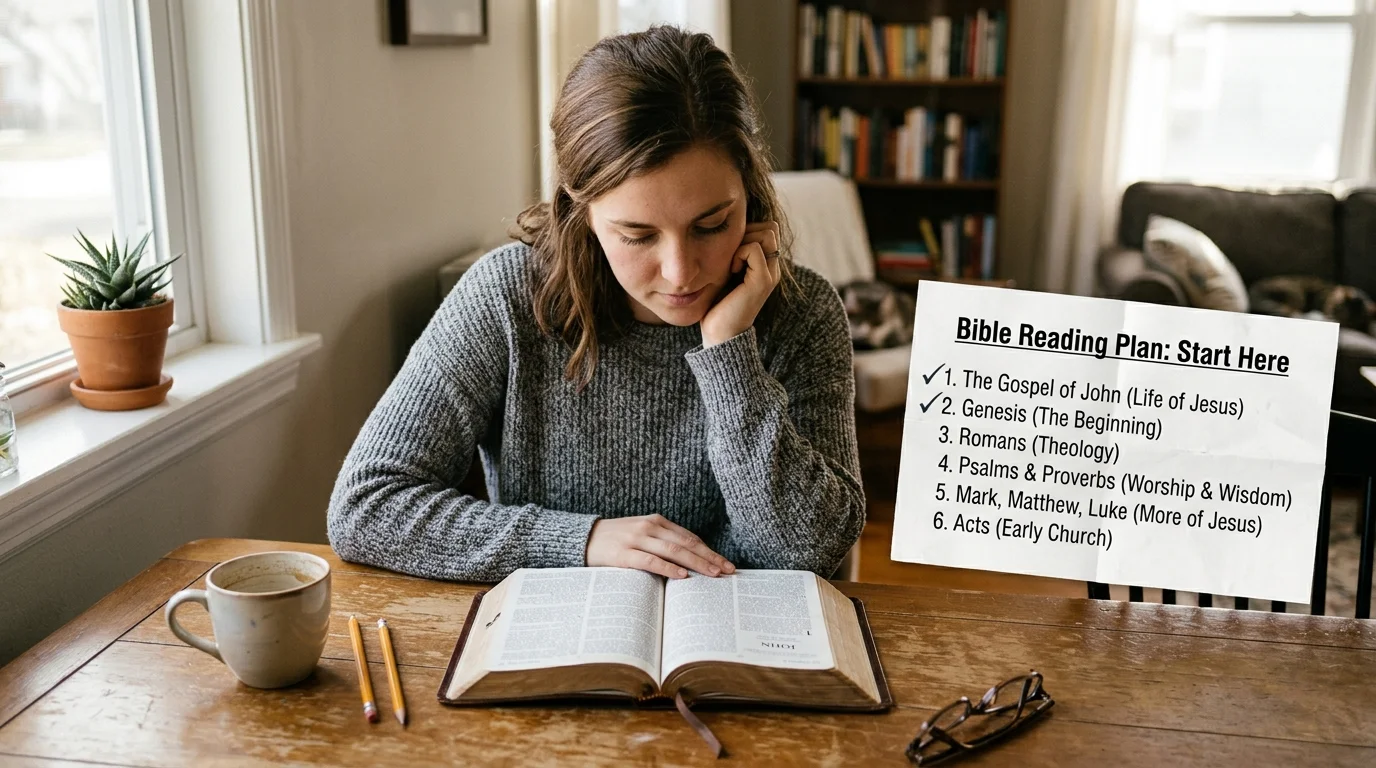
Different Bible reading plans work well for different people. Some prefer reading one Gospel before moving into Acts and the New Testament letters. Others enjoy reading one chapter from the Old Testament, one Psalm, and one chapter from the New Testament each day.
A simple beginner-friendly order is:
John → Mark → Matthew → Luke → Acts → Romans → James → Proverbs → Psalms → Genesis → Exodus, then continue through the rest of Scripture.
Whichever plan you choose, focus on understanding rather than reading quickly. A few carefully studied verses often have a greater impact than many chapters read without reflection.
Faith-Based Action Steps
1. A Prayer Before Reading
“Heavenly Father, thank You for giving me Your Word. As I begin reading the Bible, open my heart and mind to understand Your truth. Help me see Jesus more clearly, grow in faith, and apply what I learn each day. Guide me by Your Holy Spirit and draw me closer to You. In Jesus’ name, Amen.”
2. Create a Simple Reading Habit
Set aside 15–20 minutes each day to read the Bible. Start with one chapter, write down one verse that stands out, and ask yourself three questions:
- What does this teach me about God?
- What does this teach me about myself?
- How can I live this out today?
Small, consistent steps build lasting spiritual habits.
3. Learn With Other Believers
Join a local church Bible study or meet regularly with a mature Christian mentor. Reading the Bible with others provides encouragement, accountability, and helpful insights that deepen your understanding of Scripture.