
Biblical Background
Flowers appear throughout both the Old and New Testaments as symbols of beauty, joy, blessing, and the fleeting nature of earthly life. In the ancient Near East, wildflowers covered hillsides during the rainy season but often faded quickly under the hot sun. This natural cycle became a vivid illustration for biblical writers.
In the Old Testament, flowers decorated the temple and represented God’s beauty and creativity. Passages such as Song of Songs 2:1–2 use flowers to express love and delight, while Isaiah 40:6–8 reminds readers that human glory fades like flowers, but God’s Word stands forever.
Jesus also referred to flowers in His teaching. In Matthew 6:28–30, He pointed to the lilies of the field as evidence of God’s loving care. If God beautifully clothes wildflowers that bloom for only a short time, believers can trust Him to provide for their daily needs.
These images helped people in biblical times understand spiritual truths through everyday experiences. They continue to speak to Christians today with the same timeless message of hope and faith.
Key References From Core Bible Books
The book of Psalms reminds believers of God’s compassion and the temporary nature of human life. Psalm 103:15–17 compares people to flowers that flourish briefly, while emphasizing that God’s steadfast love lasts forever. This book offers comfort by directing our focus from life’s uncertainty to God’s eternal faithfulness.
The prophet Isaiah uses flowers to teach about the lasting truth of God’s promises. Isaiah 40:8 declares, “The grass withers and the flowers fall, but the word of our God endures forever” (NIV). Isaiah is especially relevant because it contrasts temporary earthly beauty with God’s unchanging Word.
The Gospel of Matthew includes Jesus’ teaching about the lilies of the field in Matthew 6:28–30. This passage encourages believers to replace worry with trust in their Heavenly Father, making it one of the most beloved Scriptures about flowers.
The book of James echoes the Old Testament by reminding readers that worldly riches and human achievements fade like flowers. James 1:10–11 calls believers to place their confidence in God rather than temporary possessions.
Together, these books present flowers as symbols of God’s care, life’s brevity, and the eternal hope found in His promises.
Spiritual Interpretations
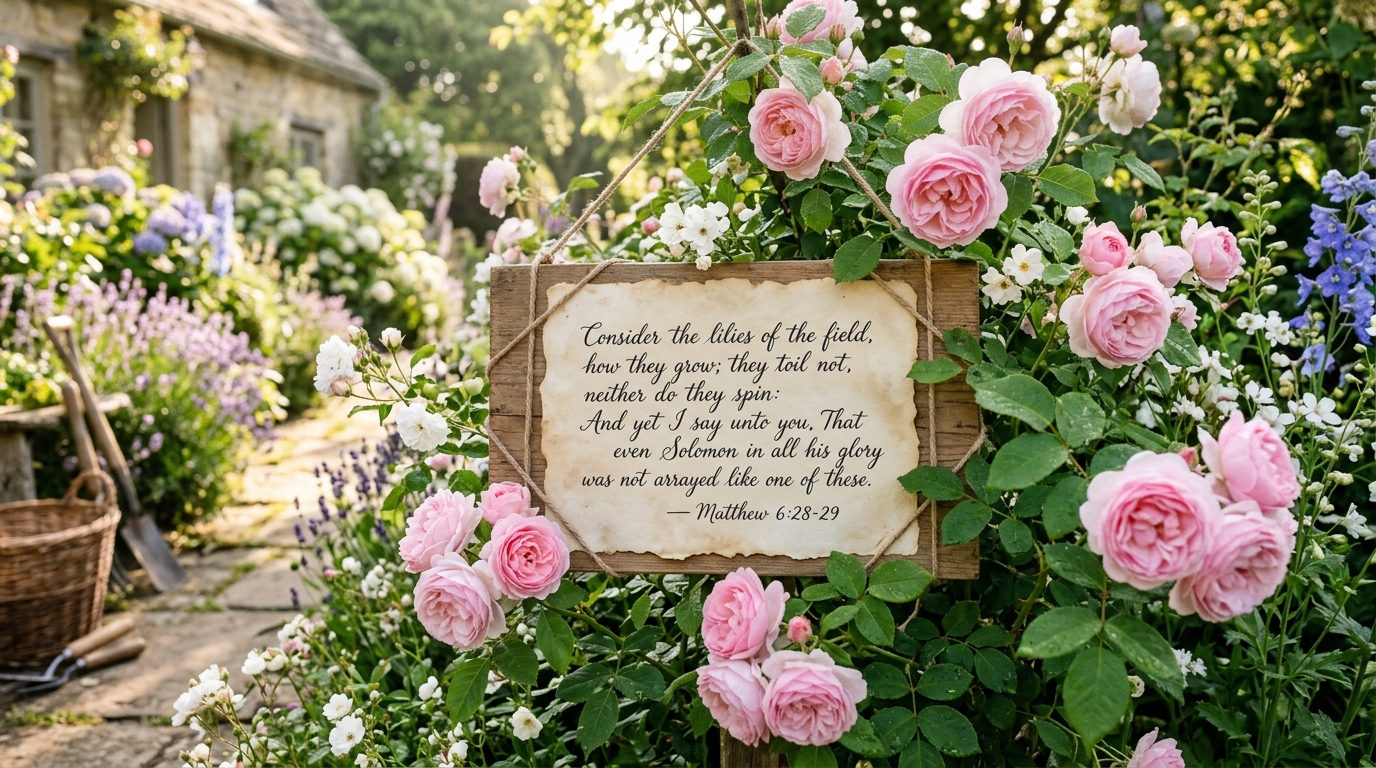
1. Flowers Remind Us of God’s Loving Care
“See how the flowers of the field grow. They do not labor or spin.” — Matthew 6:28 (NIV)
Jesus pointed to flowers as living evidence of God’s faithful provision. They do not worry about tomorrow, yet the Father clothes them with beauty. This encourages believers to trust God with their daily needs instead of being consumed by anxiety.
2. God’s Word Lasts Forever
“The grass withers and the flowers fall, but the word of our God endures forever.” — Isaiah 40:8 (NIV)
Flowers are beautiful, but their beauty is temporary. God’s truth never fades. When life changes unexpectedly, His promises remain dependable and unchanging, giving believers a firm foundation for every season.
3. Life Is Precious and Temporary
“The life of mortals is like grass, they flourish like a flower of the field.” — Psalm 103:15 (NIV)
Flowers remind us that earthly life is brief. Rather than causing fear, this truth encourages us to live each day with gratitude, faith, and purpose. We are invited to invest in what has eternal value by loving God and serving others.
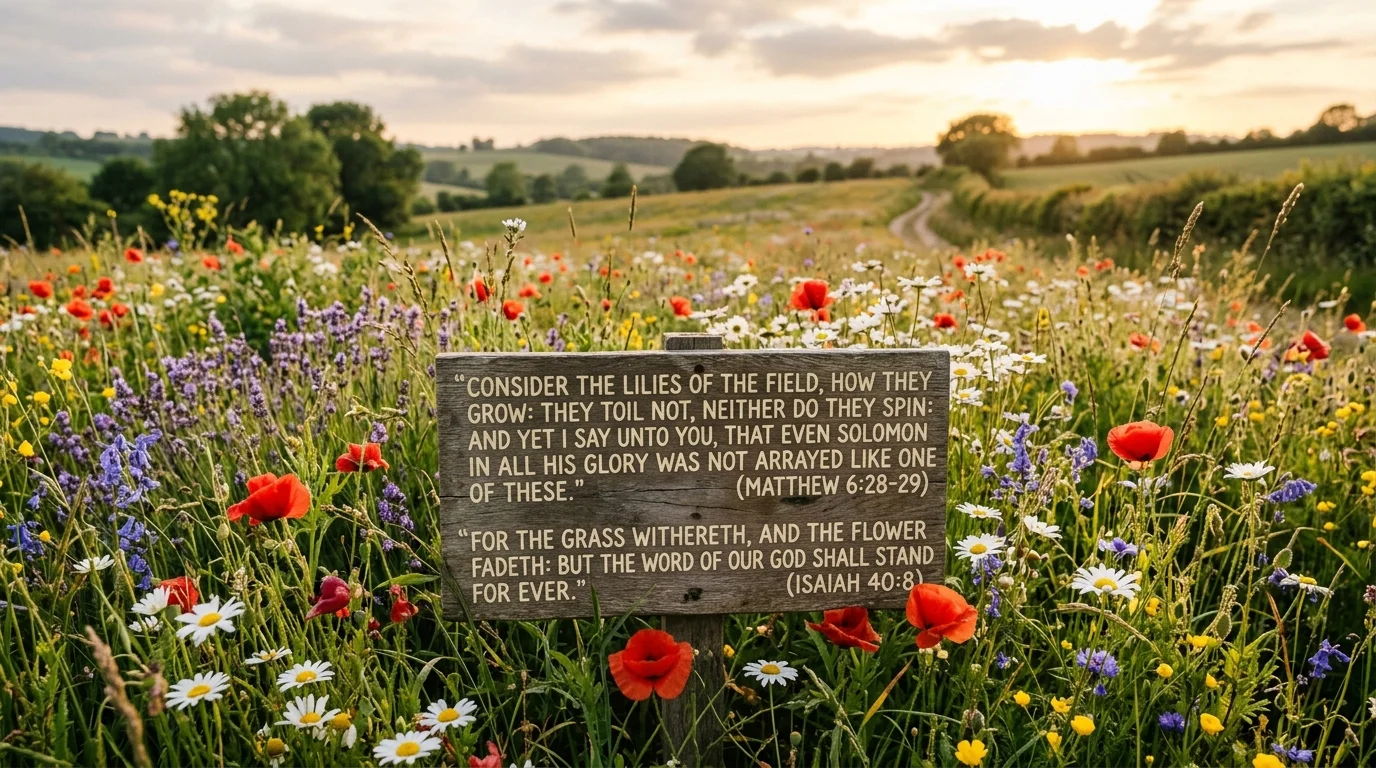
4. God Creates Beauty From His Hands
“Consider how the wild flowers grow.” — Luke 12:27 (NIV)
Every flower reflects God’s wisdom and creativity. Their colors, patterns, and fragrance remind us that the Creator delights in beauty and pays attention to even the smallest details. If God cares for wildflowers, believers can rest in His loving care for them as well.
Variations and Related Themes
Flowers symbolize different truths depending on the biblical context. In some passages they represent God’s provision and beauty, while in others they remind readers that earthly life and material success are temporary.
Gardens filled with flowers often point to peace, fruitfulness, and God’s blessing. Individual lilies frequently symbolize trust in God’s care, while fading flowers emphasize the importance of placing hope in eternal things rather than temporary pleasures.
These different images work together to encourage believers to appreciate God’s creation while keeping their hearts fixed on His everlasting kingdom.
Faith-Based Action Steps
1. A Prayer of Trust
“Heavenly Father, thank You for the beauty of Your creation and for the lessons You teach through it. Help me trust You just as You faithfully care for the flowers of the field. When I become anxious or discouraged, remind me that Your love never changes. Fill my heart with peace and help me rest in Your promises. In Jesus’ name, Amen.”
2. Reflect on God’s Creation
The next time you see flowers, pause for a few moments. Read Matthew 6:28–30 and thank God for His faithful care. Ask yourself how you can trust Him more fully with your worries, hopes, and future.
3. Share God’s Encouragement
Encourage someone who is struggling by sharing one of these Bible verses about flowers. A simple conversation, handwritten note, or prayer can remind another believer that God’s love is constant, even during difficult seasons.