Biblical Background
The Bible was originally written over many centuries by numerous human authors who were inspired by God. Although the original manuscripts did not contain chapter or verse numbers, these divisions were added later to make Scripture easier to read, reference, and study.
Today, most Christian Bibles contain 66 books, divided into:
- 39 books in the Old Testament
- 27 books in the New Testament
While some Christian traditions include additional books in the Old Testament (commonly called the Deuterocanonical books or Apocrypha), the commonly used Protestant Bible contains 66 books.
How Many Chapters Are There in the Bible?
The standard Protestant Bible contains:
- 66 Books
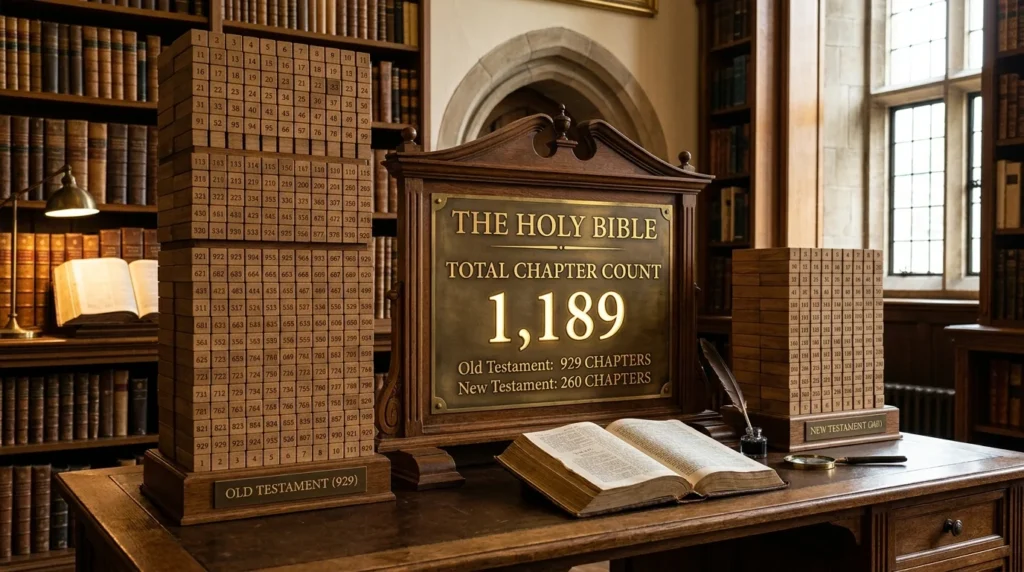
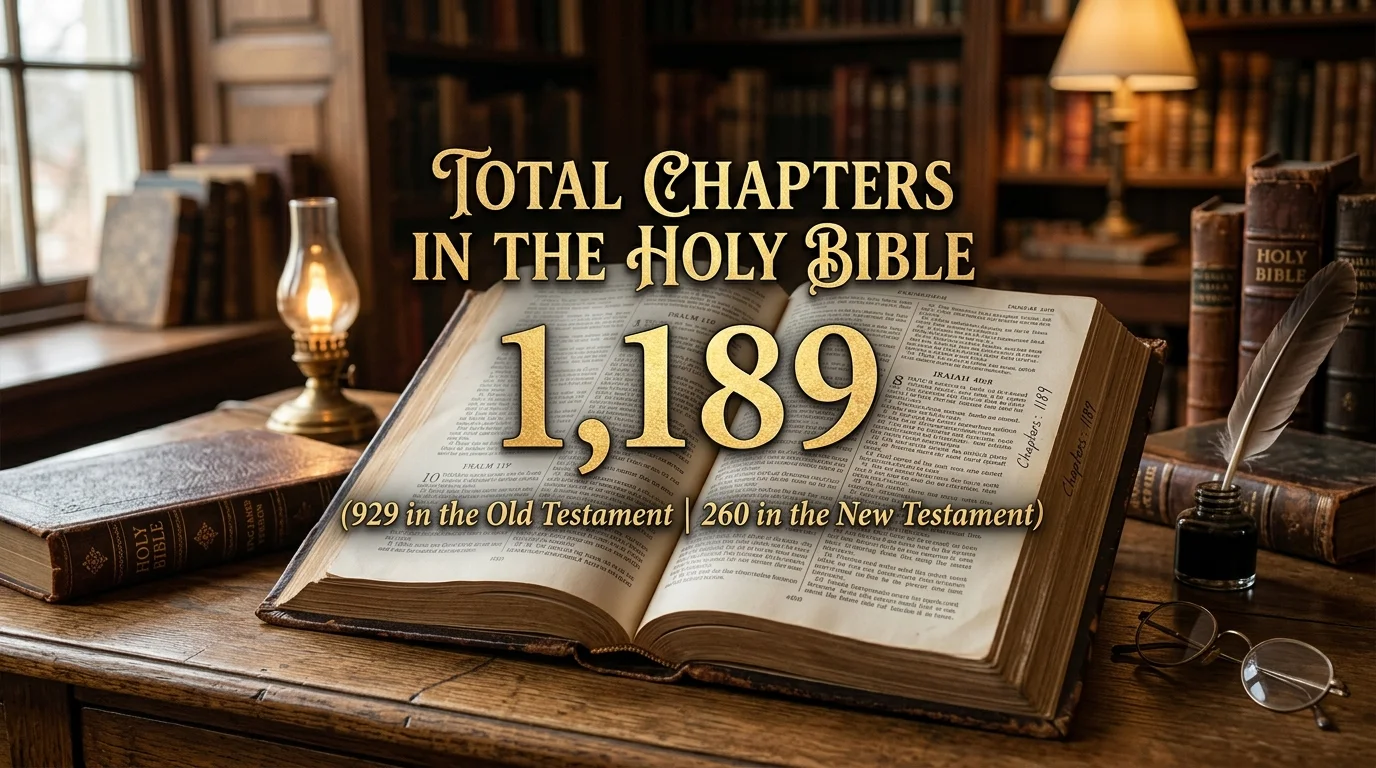
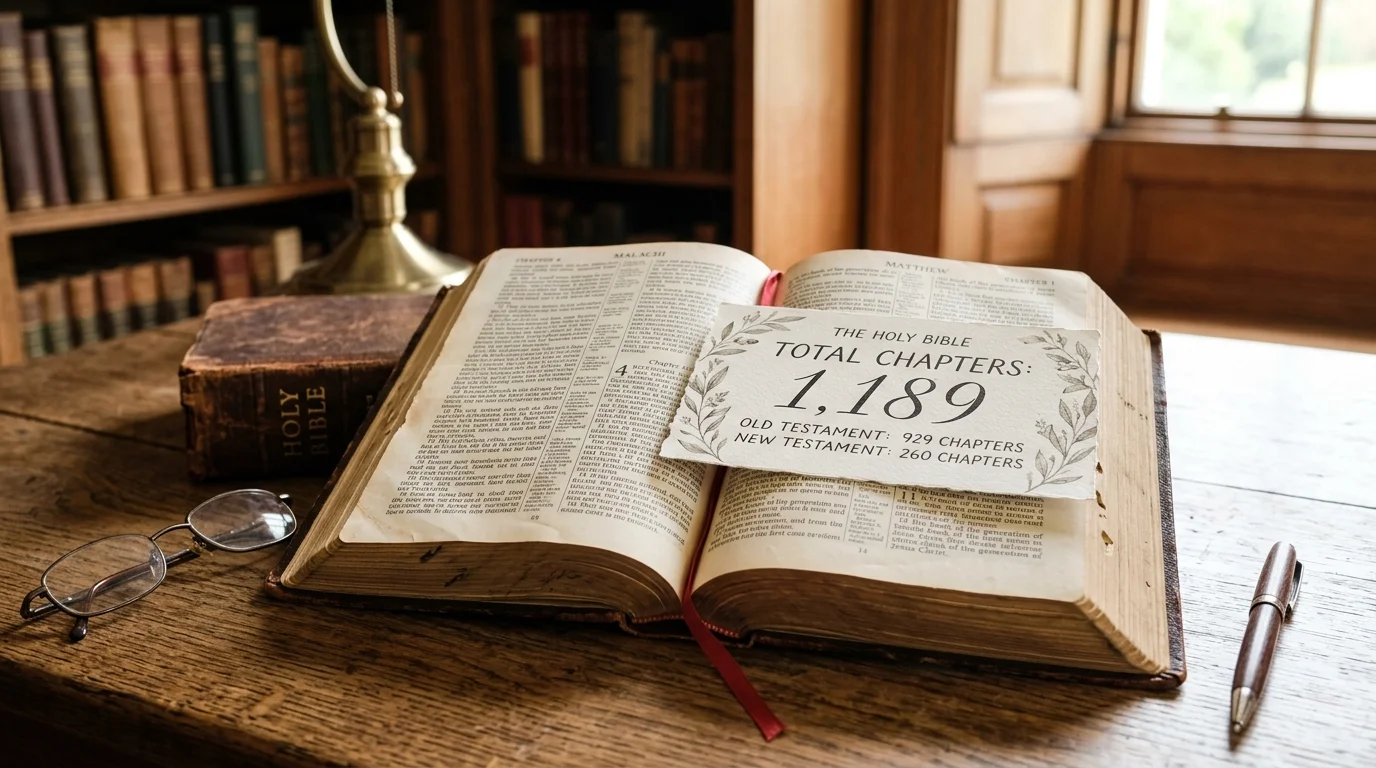
- 1,189 Chapters
- 31,102 Verses
These chapters are divided between the Old and New Testaments.
Old Testament
- 39 Books
- 929 Chapters
- 23,145 Verses
New Testament
- 27 Books
- 260 Chapters
- 7,957 Verses
Total:
- 66 Books
- 1,189 Chapters
- 31,102 Verses
Breakdown by Testament
Old Testament
The Old Testament begins with Genesis and ends with Malachi. It contains:
- The Law (Pentateuch)
- Historical Books
- Wisdom Literature
- Major Prophets
- Minor Prophets
These 39 books contain 929 chapters, making up most of the Bible.
New Testament
The New Testament begins with Matthew and concludes with Revelation. It includes:
- The Four Gospels
- Acts
- Paul’s Letters
- General Epistles
- Revelation
Together, these books contain 260 chapters.
Books With the Most Chapters
Several books stand out because of their length.
Psalms
- 150 Chapters
The Book of Psalms has more chapters than any other book in the Bible.
Isaiah
- 66 Chapters
Known for its prophecies about the coming Messiah.
Jeremiah
- 52 Chapters
Contains messages of warning, hope, and restoration.
Genesis
- 50 Chapters
Records creation, the patriarchs, and God’s covenant with Israel’s ancestors.
Ezekiel
- 48 Chapters
Features powerful visions and prophecies during the Babylonian exile.
Books With Only One Chapter
Five books contain just a single chapter:
- Obadiah
- Philemon
- 2 John
- 3 John
- Jude
Despite their brevity, these books contain valuable spiritual teachings.
Interesting Bible Facts
Longest Book
Psalms contains the greatest number of chapters.
Shortest Book
Obadiah is the shortest book in the Old Testament, while 2 John is the shortest New Testament book by verse count.
Longest Chapter
Psalm 119 contains 176 verses, making it the longest chapter in the Bible.
Shortest Chapter
Psalm 117 contains only 2 verses.
Middle Chapter
Many readers note Psalm 118 as the middle chapter in the Protestant Bible, though the exact midpoint can vary depending on the edition and how introductory material is counted.
Why Chapters Matter
Easier Navigation
Chapter divisions make it simple to locate passages quickly.
Organized Bible Reading
Many reading plans divide Scripture by chapters, making long-term reading goals easier to achieve.
Better Study
Chapters allow readers to focus on individual events, teachings, and themes without becoming overwhelmed.
Memorization
Breaking Scripture into chapters and verses helps with learning and recalling God’s Word.
Variations and Related Themes
People searching for how many chapters are there in the Bible also often look for how many books are in the Bible, how many verses are in the Bible, Bible reading plans, longest chapter in the Bible, shortest chapter in the Bible, Bible statistics, and how long it takes to read the Bible.
Understanding the Bible’s structure can make daily reading more manageable and help readers appreciate how the different books work together to tell one unified story.
Faith-Based Action Steps
1. A Prayer Before Reading the Bible
“Heavenly Father, thank You for the gift of Your Word. As I read the Bible, help me understand its message and apply its truth to my daily life. Give me wisdom, patience, and a heart that desires to know You more deeply. May Your Word guide my decisions and strengthen my faith each day. Amen.”
2. Start a Daily Reading Plan
Reading just three to four chapters each day allows many people to complete the Bible in about one year.
3. Keep a Bible Journal
Write down meaningful verses, questions, prayers, and insights as you read through each chapter.
Frequently Asked Questions
How many chapters are in the Bible?
The Protestant Bible contains 1,189 chapters.
How many chapters are in the Old Testament?
The Old Testament contains 929 chapters.
How many chapters are in the New Testament?
The New Testament contains 260 chapters.
How many books are in the Bible?
The Protestant Bible contains 66 books—39 in the Old Testament and 27 in the New Testament.
Which book has the most chapters?
Psalms has the most chapters, with 150.
Which Bible chapter is the longest?
Psalm 119 is the longest chapter, containing 176 verses.
Which Bible chapter is the shortest?
Psalm 117 is the shortest chapter, with only 2 verses.
How long does it take to read the Bible?
Reading three to four chapters each day usually allows you to finish the Bible in about one year.