
Biblical Background
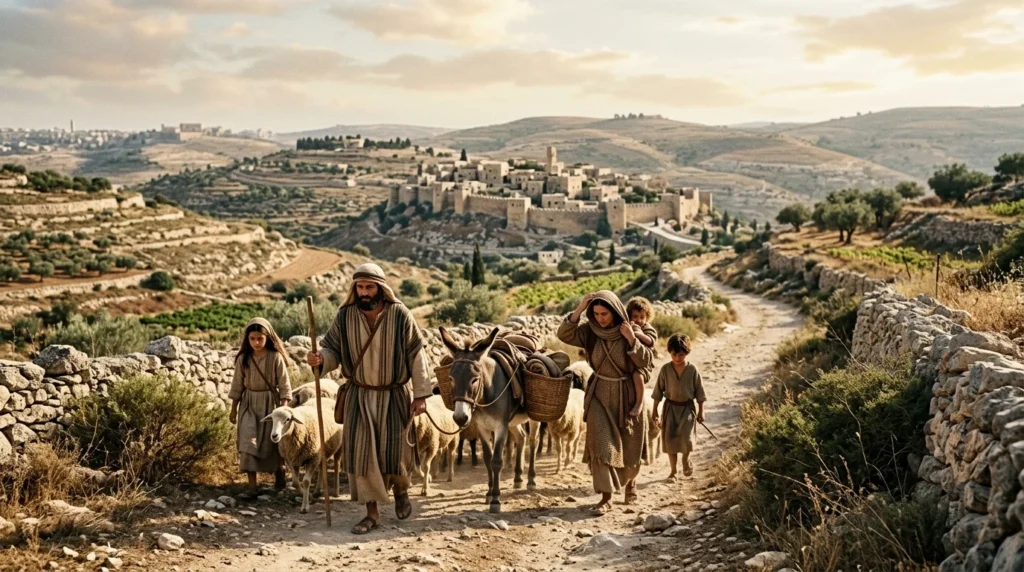
The land central to the Bible plays a significant role from Genesis to Revelation. God promised this land to Abraham and his descendants, and it became the setting for many of the Bible’s major events.
Throughout the Old Testament, the region is known by several names, including:
- Canaan
- The Promised Land
- The land of Israel
- The land of Judah
During the New Testament period, the area was divided into regions such as Judea, Galilee, and Samaria, all under Roman rule.
The modern use of the name Palestine developed through historical and political changes that occurred after the biblical period.
Does the Word “Palestine” Appear in the Bible?
The word “Palestine” does not appear in the original Hebrew Old Testament or the original Greek New Testament as the standard name for the land.
However, some older English Bible translations, such as the King James Version (KJV), use the word “Palestina” or “Palestina” in Joel 3:4 (spelled Palestina in the KJV). This reflects an older English rendering related to the land of the Philistines, not the modern geopolitical term “Palestine.”
Most modern Bible translations instead translate this passage as “Philistia” or “the land of the Philistines.”
What Was the Land Called in the Bible?
Canaan
Before Israel entered the land, it was commonly known as Canaan, named after the Canaanite peoples who lived there.
The Promised Land
God promised this land to Abraham, Isaac, and Jacob as part of His covenant.
Israel
After the Israelites settled in the land, it became known as the land of Israel.
Judah
Following the division of the kingdom, the southern kingdom became known as Judah.
Judea, Galilee, and Samaria
In the New Testament, these regional names describe where Jesus lived, traveled, taught, and performed miracles.
Where Did the Name “Palestine” Come From?
The name is connected to the Philistines, an ancient people who lived along the Mediterranean coast.
After the Bar Kokhba revolt in the second century AD, the Roman Emperor Hadrian renamed the province Syria Palaestina. Many historians believe this was intended to diminish the association of the land with Judea after the revolt.
From that period onward, forms of the name “Palestine” became increasingly common in historical geography and later literature.
Important Places in the Biblical Land
Jerusalem
The spiritual and political center of Israel and the location of the Temple.
Bethlehem
The birthplace of Jesus Christ.
Nazareth
The town where Jesus grew up.
Galilee
The region where much of Jesus’ public ministry took place.
Jericho
One of the oldest cities mentioned in the Bible.
Mount Carmel
The site of Elijah’s confrontation with the prophets of Baal.
Jordan River
The river where Jesus was baptized and where Israel crossed into the Promised Land.
Why the Land Is Important in the Bible
God’s Covenant With Abraham
God promised Abraham descendants and a land where they would dwell.
The History of Israel
Most events in the Old Testament occurred within this region.
The Ministry of Jesus
Jesus was born, taught, performed miracles, died, and rose again within this land.
Biblical Prophecy
Many prophetic events are connected to places found in the land of Israel and surrounding regions.
Variations and Related Themes
People searching for Palestine in the Bible also often look for Israel in the Bible, the Promised Land, Canaan, Philistines in the Bible, Holy Land, Judea, Galilee, and biblical geography.
Understanding these terms helps readers distinguish between ancient biblical place names and later historical developments.
Faith-Based Action Steps
1. Read the Bible With Historical Context
Learning the geography and history of biblical places can enrich your understanding of Scripture.
2. Study Maps Alongside Scripture
Use Bible maps while reading Genesis, Joshua, the Gospels, and Acts to visualize the locations of key events.
3. Focus on God’s Redemptive Plan
While geography is important, the Bible’s central message is God’s relationship with humanity and His plan of salvation through Jesus Christ.