
Does the Bible Mention Keeping Cremated Ashes?
No.
The Bible does not specifically mention keeping the ashes of a loved one after cremation.
There is no verse that says Christians must keep ashes, bury them, scatter them, or avoid any of these practices.
Because Scripture is silent on this specific question, Christians are encouraged to make thoughtful decisions guided by biblical wisdom, conscience, and respect for the deceased.
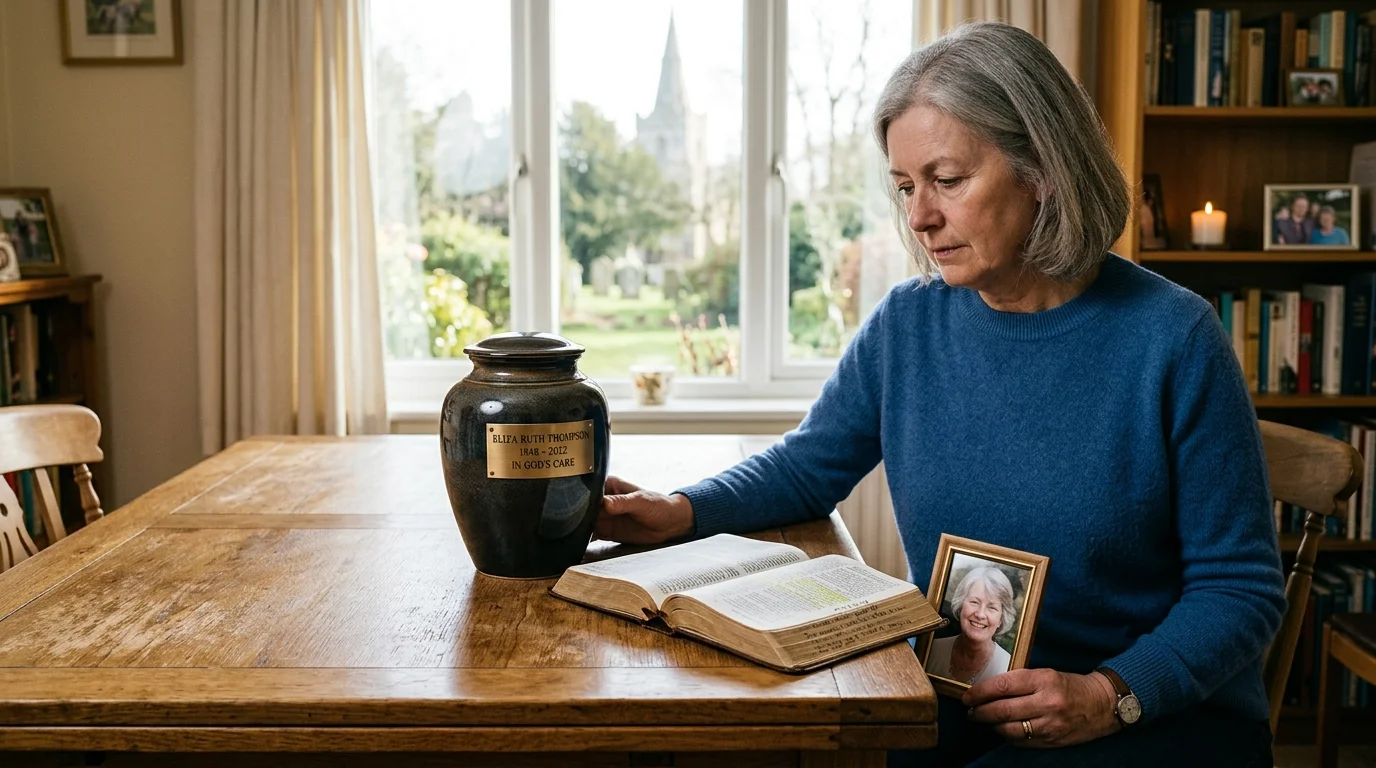
What Does the Bible Say About Cremation?
The Bible records both burial and instances where bodies were burned, but it never commands cremation or forbids it.
Throughout Scripture, burial was the most common practice.
Examples include:
- Abraham was buried (Genesis 25:9–10).
- Sarah was buried (Genesis 23).
- Moses was buried by God (Deuteronomy 34:5–6).
- Jesus was buried in a tomb (Matthew 27:57–60).
While burial was customary, the Bible does not teach that burial is the only acceptable method of caring for a body.
God Can Raise the Dead Regardless of What Happens to the Body
One of the Bible’s clearest teachings is that God’s power is not limited by the condition of a person’s body.
1 Corinthians 15:42–44 (NIV)
“The body that is sown is perishable, it is raised imperishable.”
Whether a body has:
- Been buried,
- Cremated,
- Lost at sea,
- Destroyed in war,
- Or returned to dust,
God is fully able to raise it in the resurrection.
The Christian hope rests in God’s power, not in the preservation of physical remains.
“Dust You Are, and to Dust You Will Return”
Genesis 3:19
“For dust you are and to dust you will return.” (NIV)
This verse reminds us that every human body eventually returns to the earth.
Whether through natural decomposition after burial or through cremation, the physical body ultimately returns to dust. The Bible’s emphasis is on God’s promise of resurrection rather than the process by which the body returns to the earth.
Honoring the Dead
The Bible teaches believers to treat the dead with dignity and respect.
Throughout Scripture, people honored their loved ones by:
- Mourning their loss.
- Providing respectful burial.
- Comforting grieving families.
- Remembering God’s faithfulness.
Keeping ashes in a respectful manner can be one way some families choose to remember a loved one, but Scripture does not present it as a spiritual requirement.
Is It Wrong to Keep a Loved One’s Ashes at Home?
The Bible does not say it is sinful to keep a loved one’s ashes.
For many families, an urn serves as a reminder of someone they deeply loved.
However, Christians should avoid treating ashes as:
- Sacred objects with spiritual power.
- Objects of worship.
- Means of communicating with the dead.
- Sources of supernatural protection or blessing.
The Bible consistently teaches that our hope is in God alone, not in physical objects.
The Christian Hope Is Resurrection
The greatest comfort the Bible offers is not where a person’s ashes are kept but God’s promise of eternal life through Jesus Christ.
John 11:25–26 (NIV)
“I am the resurrection and the life. The one who believes in me will live, even though they die.”
1 Thessalonians 4:13–14 (NIV)
Paul reminds believers not to grieve without hope because those who have died in Christ will be raised.
This hope applies regardless of whether someone was buried or cremated.
Practical Considerations for Christian Families
Since the Bible gives no direct command, families may prayerfully consider:
- The wishes of the deceased, if known.
- Local laws and regulations.
- Family unity.
- Respectful treatment of the remains.
- Personal conscience before God.
Different Christian traditions may have different customs, but faithful believers hold a variety of views on this issue.
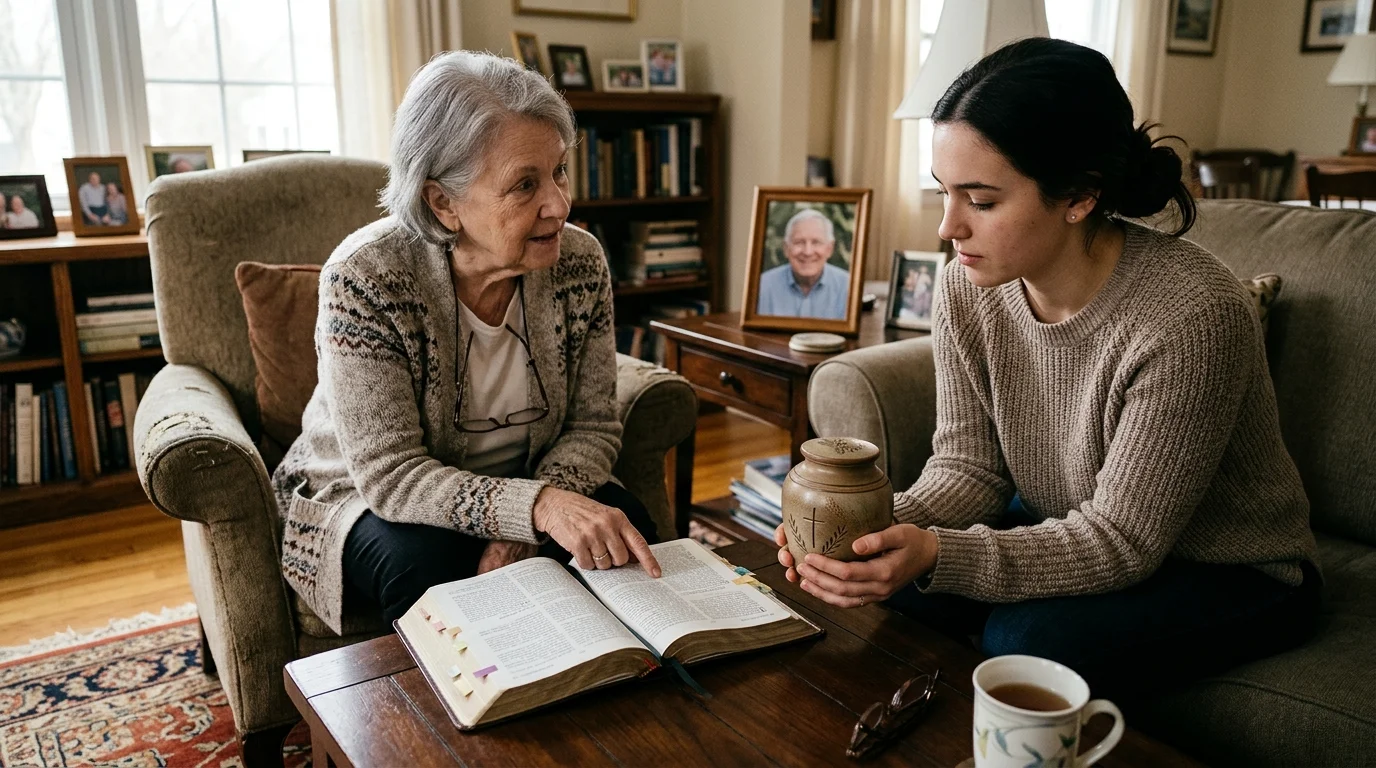
What the Bible Does Not Teach
The Bible does not teach that:
- Keeping ashes prevents resurrection.
- Cremation makes resurrection impossible.
- Ashes possess spiritual power.
- Christians must keep or scatter ashes.
- A person’s eternal destiny depends on burial or cremation.
Instead, salvation and resurrection depend on God’s grace and the hope found in Jesus Christ—not on the condition or location of earthly remains.
A Prayer for Those Who Are Grieving
Heavenly Father,
Thank You for Your promise to be close to the brokenhearted. As I remember my loved one, comfort my heart with the hope of the resurrection and the assurance of Your unfailing love. Give me wisdom as I make decisions that honor both You and the memory of the one I have lost. Help me trust Your promises and find peace in knowing that nothing is beyond Your power. Strengthen me each day as I place my hope in You.
In Jesus’ name, Amen.