Biblical Background
The Bible is divided into two major sections: the Old Testament and the New Testament. The Old Testament tells the story of creation, God’s covenant with Israel, and His promises of redemption. The New Testament focuses on the life, death, and resurrection of Jesus Christ, along with the growth of the early church.
Although the books are arranged by literary type rather than strict chronology, they together tell one continuous story of God’s faithfulness.
The apostle Paul wrote in 2 Timothy 3:16–17, “All Scripture is God-breathed and is useful for teaching, rebuking, correcting and training in righteousness” (NIV). Every book has value, yet many new believers find it helpful to begin with the life and teachings of Jesus before exploring the rest of Scripture.
As you read, remember that the purpose is not simply to finish the Bible but to know God more deeply and grow in faith.
Key References From Core Bible Books
The book of Psalms encourages delighting in God’s Word. Psalm 119:105 says, “Your word is a lamp for my feet, a light on my path” (NIV). Psalms reminds readers that Scripture provides guidance for daily life.
The book of Proverbs offers practical wisdom for everyday decisions. Proverbs 3:5–6 teaches believers to trust the Lord and seek His direction rather than relying solely on human understanding.
The Gospel of John is often recommended as a starting point because it clearly presents the identity of Jesus Christ. John 20:31 explains that the Gospel was written so readers may believe that Jesus is the Messiah and have life through Him.
The book of James provides practical instruction for living out Christian faith. James 1:22 encourages believers to become doers of the Word rather than hearers only, reminding us that Bible reading should lead to faithful obedience.
Together, these books encourage believers to know Christ, grow in wisdom, and apply God’s truth every day.
Spiritual Interpretations
1. Begin With Jesus
“But these are written that you may believe that Jesus is the Messiah, the Son of God.” — John 20:31 (NIV)
Reading one of the Gospels first helps you understand the life, teachings, death, and resurrection of Jesus. Since He is the center of Scripture, beginning with His story provides a strong foundation for everything else you will read.
2. Let God’s Word Guide Your Daily Life
“Your word is a lamp for my feet, a light on my path.” — Psalm 119:105 (NIV)
The Bible is meant to guide everyday decisions, strengthen faith, and reveal God’s character. Reading consistently, even a small portion each day, allows God’s truth to shape your heart over time.
3. Grow in Wisdom Step by Step
“Trust in the LORD with all your heart.” — Proverbs 3:5 (NIV)
Bible reading is a lifelong journey rather than a race. As you trust God and seek His wisdom, He faithfully teaches you through every book of Scripture.
4. Put God’s Word Into Practice
“Do not merely listen to the word, and so deceive yourselves. Do what it says.” — James 1:22 (NIV)
Reading the Bible becomes truly life-changing when it leads to obedience. Ask God to help you apply what you learn in your relationships, decisions, and daily walk with Him.
Variations and Related Themes
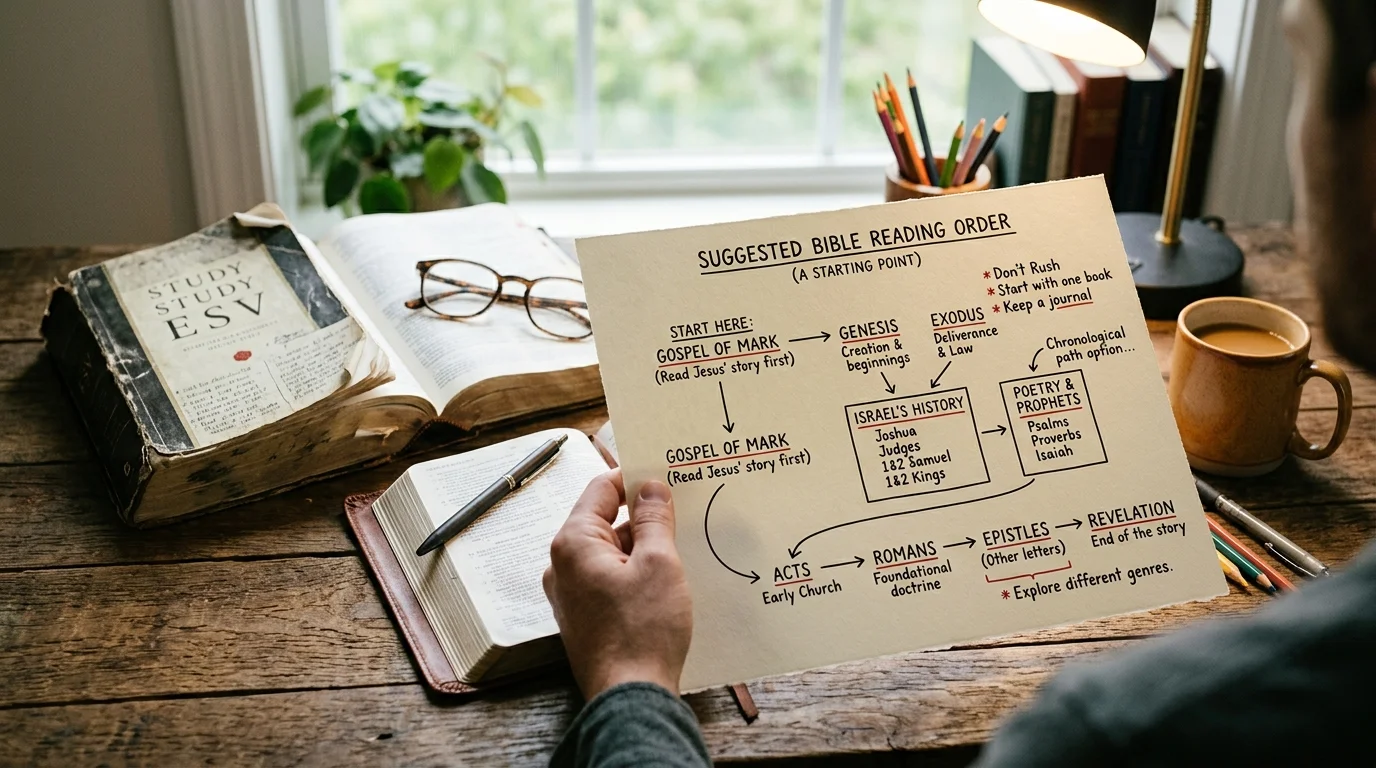
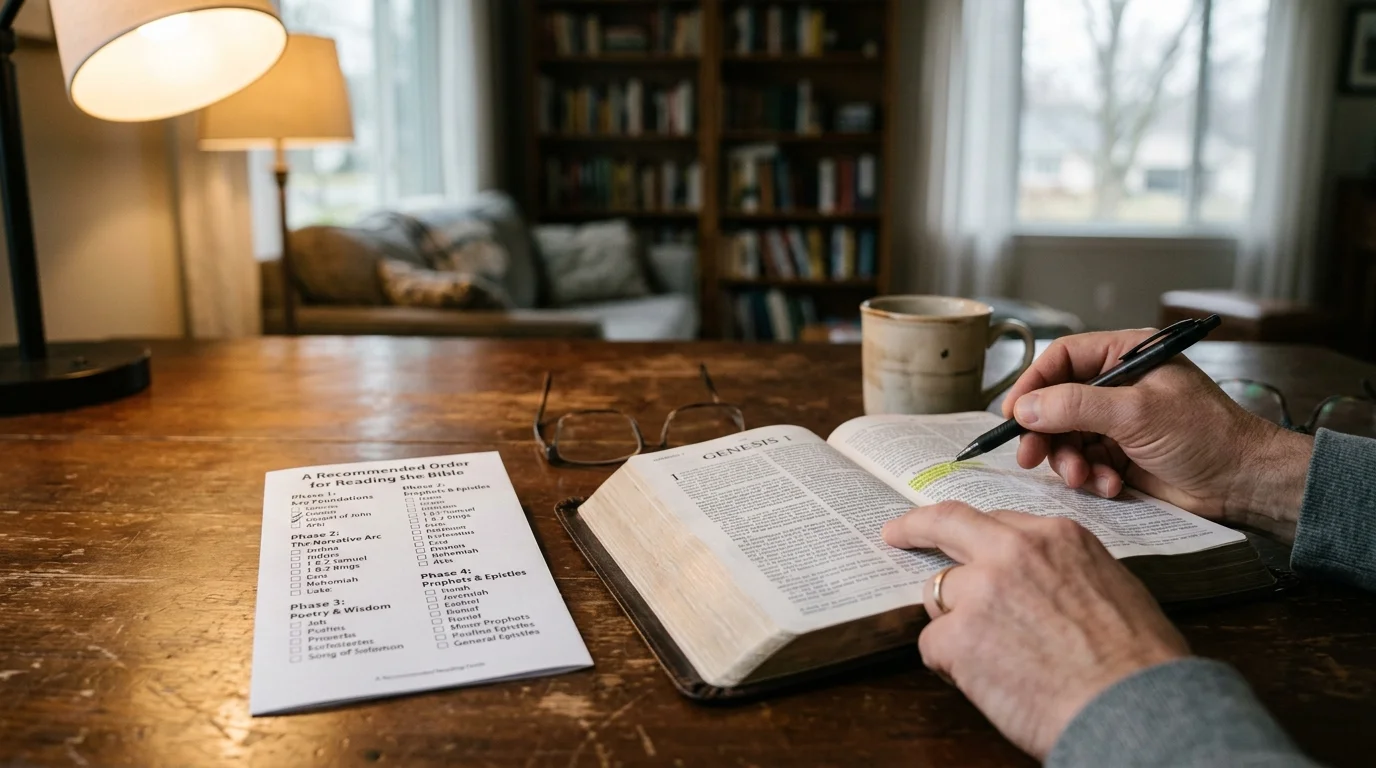
There are several helpful ways to read the Bible, depending on your goals. If you’re a beginner, consider this order:
- John – Learn about Jesus and His mission.
- Mark – Read a fast-paced account of Jesus’ ministry.
- Luke – Discover a detailed account of Christ’s life.
- Acts – See how the early church began.
- James – Gain practical wisdom for Christian living.
- Psalms – Read alongside your main reading for prayer and worship.
- Proverbs – Read one chapter each day or several times each week for practical wisdom.
- Genesis – Explore the beginning of God’s story.
- Continue through the remaining New Testament before working through the rest of the Old Testament.
Some believers also enjoy reading the Bible chronologically, while others follow a one-year Bible reading plan. Whichever method you choose, consistency matters more than speed.
Faith-Based Action Steps
1. A Prayer Before Reading the Bible
“Heavenly Father, thank You for giving me Your Word. Guide me as I begin reading the Bible, and help me understand what You want to teach me. Open my heart to receive Your truth, strengthen my faith, and help me obey what I learn. Lead me by Your Holy Spirit as I grow closer to You each day. In Jesus’ name, Amen.”
2. Create a Simple Reading Habit
Choose a consistent time each day, even if it’s only 10 to 15 minutes. Begin by reading one chapter, ask what it teaches about God, and write down one practical lesson you can apply that day.
3. Learn With Other Believers
Join a Bible study group, attend your local church regularly, or read Scripture with a trusted Christian friend. Discussing God’s Word with others provides encouragement, accountability, and fresh insight.