
Biblical Background: What Does the Bible Say About the Heavens?
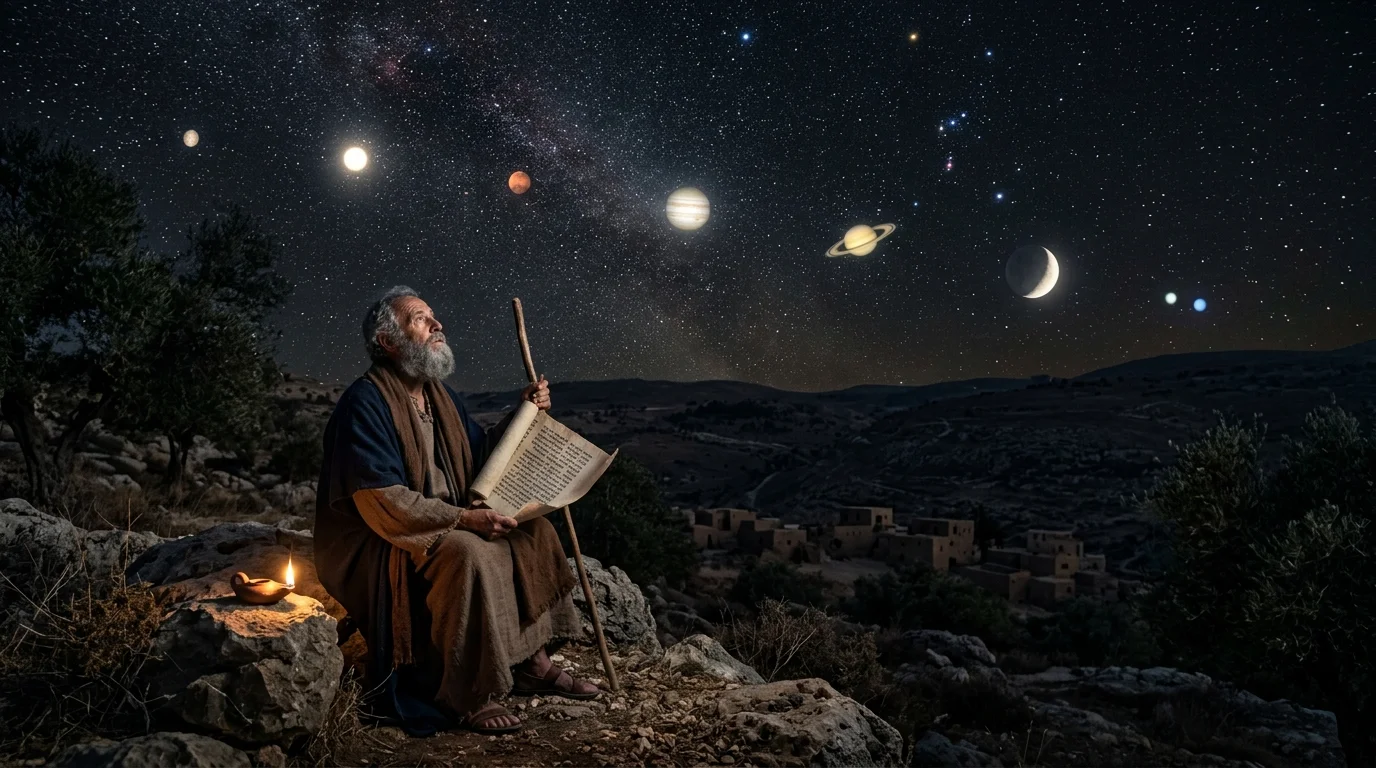
From the opening chapter of Genesis, the Bible teaches that God is the Creator of the heavens and the earth.
Genesis 1:14–16 (NIV) says:
“And God said, ‘Let there be lights in the vault of the sky to separate the day from the night, and let them serve as signs to mark sacred times, and days and years…’”
These verses describe God creating the sun, moon, and stars to give light and mark seasons.
Another well-known passage is Psalm 19:1:
“The heavens declare the glory of God; the skies proclaim the work of his hands.” (NIV)
Rather than encouraging people to worship heavenly bodies or search for hidden messages in them, Scripture consistently points readers to the Creator.
The Bible also warns God’s people against worshiping or serving the “host of heaven” (see Deuteronomy 4:19), emphasizing that celestial bodies are part of God’s creation, not objects of devotion.
Key References From Core Bible Books
Several books of the Bible help explain the biblical view of the heavens.
The book of Genesis is foundational because it records God creating the heavenly bodies (Genesis 1:14–19). Its focus is on God’s power as Creator, not on identifying planets.
The book of Psalms celebrates creation as a witness to God’s majesty. Psalm 19:1 reminds believers that the heavens reveal God’s glory.
The book of Isaiah emphasizes God’s sovereignty over the universe. Isaiah 40:26 says,
“Lift up your eyes and look to the heavens: Who created all these? He who brings out the starry host one by one…” (NIV)
The book of Hebrews points to Jesus as the divine Creator. Hebrews 1:2 teaches that God made the universe through His Son.
Together, these passages direct our attention to the Creator rather than to speculative meanings about planets.
Spiritual Interpretations
1. The Heavens Reveal God’s Glory
“The heavens declare the glory of God.” — Psalm 19:1 (NIV)
When we look at the night sky, we are reminded of God’s greatness.
Creation points beyond itself to the wisdom and power of its Creator.
The beauty of the heavens invites us to worship God.
2. God Rules Over the Universe
“Lift up your eyes… Who created all these?” — Isaiah 40:26 (NIV)
The stars, planets, and galaxies exist because God created them.
Nothing in the universe operates outside His sovereign authority.
Believers can trust the God who holds all creation together.
3. The Number Seven Often Symbolizes Completeness
“On the seventh day God had finished the work he had been doing.” — Genesis 2:2 (NIV)
Throughout Scripture, the number seven often represents completion or fullness.
Examples include the seven days of creation, the seven churches in Revelation, and many other symbolic uses.
These references should not be confused with a biblical teaching about seven planets.
4. Our Faith Rests in the Creator, Not Creation
“Through him all things were made.” — John 1:3 (NIV)
The Bible calls believers to place their hope in God alone.
While studying astronomy can inspire wonder, our worship belongs to the Creator rather than the created order.
Jesus Christ remains the center of biblical faith.
Variations & Related Themes
Many people searching for “7 planets in the Bible” are also interested in topics such as the seven heavens, the meaning of the number seven, biblical astronomy, or the star of Bethlehem. These are separate subjects and should not be confused with one another.
The Bible does not assign spiritual powers to the planets or encourage astrology. In fact, Scripture repeatedly distinguishes faithful trust in God from attempts to seek guidance through the stars (Isaiah 47:13–15). Instead, it teaches that the heavens display God’s glory and remind humanity of His greatness.
Faith-Based Action Steps
1. Praise God as Creator
Sample Prayer:
“Heavenly Father, thank You for creating the heavens and the earth. When I look at the beauty of the sky, remind me of Your greatness, wisdom, and power. Help me to worship You alone and to trust Your Word above speculation. Strengthen my faith as I marvel at Your creation. In Jesus’ name, Amen.”
2. Study Scripture Carefully
When exploring topics that combine science and the Bible, read passages in their original context.
Ask yourself:
- What is this passage teaching about God?
- What did it mean to its original audience?
- Am I drawing conclusions that the text itself supports?
Careful study helps us understand Scripture faithfully.
3. Grow in Christian Community
If you have questions about biblical symbolism, creation, or difficult passages, discuss them with a trusted pastor, Bible teacher, or mature Christian mentor.
Learning alongside other believers can deepen your understanding of God’s Word.